Have you ever wanted a slice of rainforest on your windowsill but worried about watering schedules, messy soil, or a plant that refuses to thrive? If you’ve been searching for a low-maintenance, high-style way to bring greenery into tight spaces, closed terrariums are a perfect DIY challenge. In this article you’ll discover creative closed terrarium ideas, step-by-step building instructions, design inspiration, and real-world maintenance tips so your sealed glass garden becomes a show-stopping, self-sustaining accent in your home.
Why Choose a Closed Terrarium?
A closed terrarium is essentially a tiny, sealed ecosystem. It recycles water through condensation and evaporation, which means less frequent watering and a stable, humid environment ideal for shade-loving plants. If you want a greenhouse feel without the space or fuss, a closed glass garden is one of the best indoor gardening projects you can try.
Simple Materials & Tools You’ll Need
- Clear glass container with a lid or cork (jars, apothecary jars, cloches)
- Small stones or gravel for drainage
- Activated charcoal (keeps water fresh and prevents mold)
- Potting mix suitable for moisture-loving plants
- Plants: mosses, small ferns, nerve plants (Fittonia), baby tears
- Decor: small stones, driftwood, miniature figurines (optional)
- Tools: long tweezers, small scoop or spoon, spray bottle
Step-by-Step: How to Build a Closed Terrarium
- Choose the right container. Pick a clear container with a tight-fitting lid. The shape determines the look—an apothecary jar gives a classic vibe, while a geometric glass container feels modern.
- Add a drainage layer. Place 1–2 inches of small stones or gravel at the bottom. Closed terrariums don’t have drainage holes, so this layer prevents root rot by keeping roots above standing water.
- Layer activated charcoal. A thin layer of horticultural charcoal (about ¼ inch) goes on top of the gravel to filter water and reduce odors or mold growth.
- Place the potting medium. Add a few inches of a loose, well-draining potting mix suitable for moisture-loving plants. Avoid heavy garden soil.
- Design and plant. Plan the layout like a miniature landscape. Use long tweezers to place plants—moss at the front for groundcover, a small fern as a focal point, and trailing plants toward the edge.
- Decorate. Add stones, tiny logs, or a figurine to personalize the scene. Keep decorations small and minimal to maintain balance.
- Initial watering and sealing. Lightly mist the soil until slightly damp but not waterlogged. Close the lid. Place the terrarium in bright, indirect light.
Closed Terrarium Ideas for Different Styles
Tropical Moss Forest
Use a tall glass jar with a layer of sheet moss, small ferns, and a tiny tongue fern or Selaginella. This creates an immersive rainforest look and benefits from the sealed humid environment.
Mini Fern Grotto
Choose a wide-mouthed glass cloche and plant multiple miniature ferns with a central piece of driftwood. The natural textures make this an excellent mantel or bathroom accent.
Fairy Garden Terrarium
Add a handful of pebbles, a miniature bench or house, and tiny succulents that tolerate humidity like Peperomia prostrata (careful—many succulents don’t do well in sealed setups). This is a whimsical take for kids’ rooms or a creative office display.
Office Micro-Jungle
Pick compact, slow-growing plants such as baby tears, fittonia, and polka dot plants. A sealed jar on your desk can boost mood and require virtually no care beyond rare airing.
Practical Tips & Troubleshooting
- Light balance: Closed terrariums need bright, indirect light. Avoid direct sun—glass magnifies heat and can cook your plants.
- Condensation is normal: A bit of moisture on the glass shows the water cycle is working. If there’s heavy continuous dripping, open the lid for a few hours to reduce humidity.
- Trim proactively: Keep plants from touching the glass too much. Use small scissors to prune leggy growth or remove dead leaves to prevent mold.
- When to water: Rarely — many closed terrariums can go months without additional water. If soil looks dry, mist lightly. Overwatering is the most common mistake.
- Choice of plants: Favor moisture-loving species: mosses, ferns, fittonias, Pilea depressa, and baby tears. Avoid large succulents and cacti unless you plan a semi-open terrarium.
Design Inspiration & Styling Tips
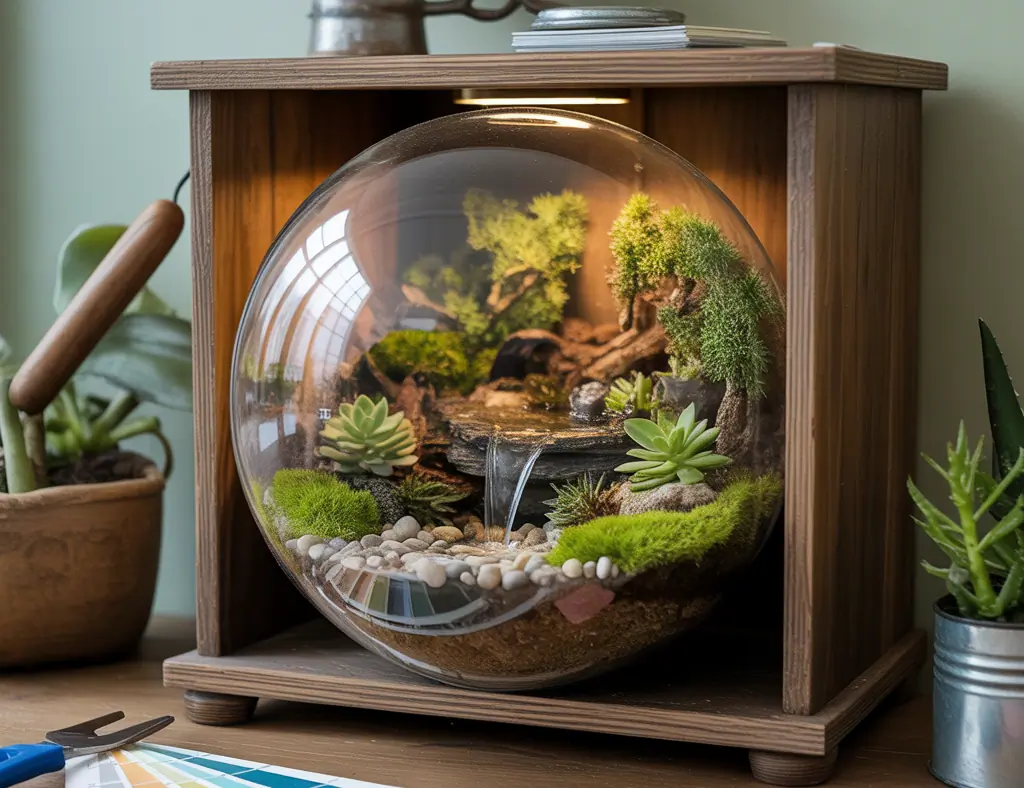
Think about scale, contrast, and texture. Use dark soil under light-colored moss for drama. Layer in tiny stones to create a dry creek bed for interest, or create a single focal plant surrounded by low moss to emphasize simplicity. Match the container style to your decor—rustic terracotta-look pots for farmhouse vibes, or sleek geometric glass for modern interiors.
Maintenance: Keeping Your Sealed Garden Healthy
Check your terrarium monthly. Look for mold, pests, or stunted plants. If mold appears (white or fuzzy spots), remove the affected material with tweezers and open the lid for a day to dry out the environment. For overgrown plants, trim at the soil line and remove cuttings. If condensation disappears entirely, mist lightly to restart the water cycle.
Closed Terrarium Ideas: Small Upgrades and Variations
- Add a layer of colored sand for a mid-century look beneath the soil layer (visible through clear glass).
- Use a mirrored tray beneath the terrarium to multiply the visual effect.
- Create a pair of terrariums with different heights for a dynamic vignette on a console table.
Frequently Asked Questions
Q1: How often should I water a closed terrarium?
A: Rarely. Most closed terrariums form a self-sustaining cycle and only need watering every few months. If the soil looks dry or plants are drooping, lightly mist. Avoid adding large amounts of water at once.
Q2: Can succulents live in a closed terrarium?
A: Generally no. Succulents prefer dry conditions and can rot in a high-humidity sealed environment. If you want succulents, use an open terrarium with excellent drainage and infrequent watering.
Q3: How do I stop mold in a closed terrarium?
A: Remove any rotting plant material promptly. Expose the terrarium to fresh air by opening the lid for several hours, then reseal. Use activated charcoal in your drainage layer to reduce the risk of odors and mold.
Conclusion — Try These Closed Terrarium Ideas Today
Closed terrarium ideas offer a rewarding DIY project that combines design, gardening, and a bit of science. Whether you want a mossy mini-forest, a fern grotto, or a tiny fairy garden, building a sealed glass garden is an achievable home improvement that brings long-lasting greenery into small spaces. Ready to start? Gather a jar, a few plants, and a sense of curiosity — then try one of the step-by-step designs above. For more hands-on inspiration, check out our DIY projects and browse related home design ideas to style your terrarium in any room.
Share your finished terrarium photos, questions, or ideas in the comments — and don’t forget to experiment. The best closed terrarium is the one that fits your style and keeps you enjoying plants every day.