Ever walked up to your front door and felt the steps were holding your whole curb appeal back — cracked mortar, uneven treads, or a plain rise that screams “fix me”? If you want a practical, long-lasting, and beautiful solution, brick steps ideas can transform your entrance without breaking the bank. Whether you’re planning a full DIY brick step makeover or hiring a mason, these design and repair ideas will inspire you to make that first step count.
Why choose brick for your steps?
Brick is a classic building material for a reason: durability, timeless style, and a wide range of color and texture options. Bricks weather well over time, they pair beautifully with stone, concrete, and wood, and they’re easy to customize with patterns, painted finishes, or integrated lighting. For homeowners looking for low-maintenance outdoor stairs or charming interior stair accents, brick is a winner.
Brick steps ideas for every style
Below are 15 practical and stylish ideas — each with quick DIY tips, materials to consider, and real-world advice to help you decide what fits your home.
1. Classic red brick with contrasting mortar
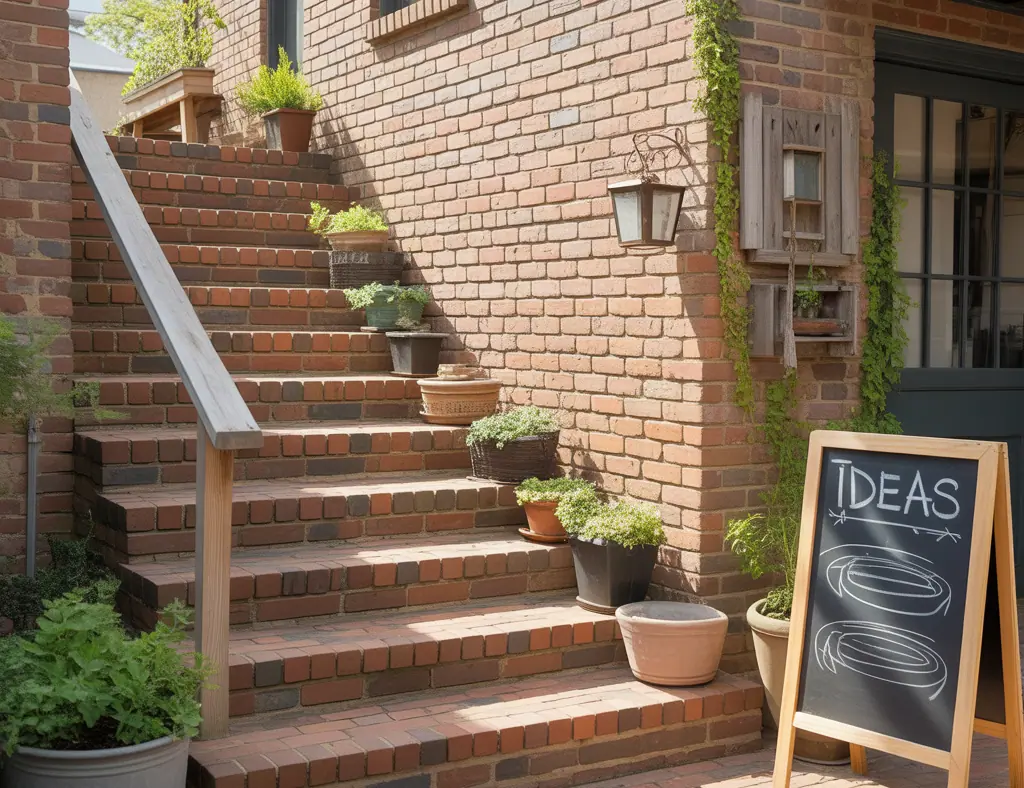
Stick with red clay bricks and use a light mortar to highlight each unit. This look suits colonial, cottage, and traditional homes. Tip: repoint cracked mortar to avoid water damage.
2. Herringbone pattern risers
Lay bricks in a herringbone pattern on the risers for visual interest. Use bullnose bricks on the tread edge for a smooth finish.
3. Mixed-material steps: stone treads, brick risers
Combine stone treads with brick risers for a luxe look that’s still budget-friendly. Choose natural stone or sawn bluestone for slip resistance.
4. Painted brick for modern entrances
Paint bricks in charcoal or white for a contemporary makeover. Use masonry paint and prime first — this is an easy weekend DIY when steps are structurally sound.
5. Curved brick steps
Curved steps soften an entryway and can be built using flexible mortar beds and smaller modular bricks. This is a medium to advanced project — consider professional help for structural integrity.
6. Built-in planters on the sides
Integrate brick planters into the side walls to frame the stairs. Fill with seasonal flowers or evergreen shrubs for year-round charm.
7. Reclaimed brick for rustic appeal
Use salvaged bricks for a weathered, storybook look. Reclaimed bricks often have irregularities that add character; repointing and sealing will help longevity.
8. Tumbled brick for a soft, aged finish
Tumbled bricks have rounded edges and a softer palette — great for cottage and farmhouse styles. They hide wear and look great with a gravel or flagstone walkway.
9. Brick steps with integrated LED lighting
Embed low-voltage LED step lights in the risers or handrail posts to improve safety and create dramatic nighttime curb appeal.
10. Wide landing steps for a grand entrance
Widen the tread to create a small landing or porch-like area. Larger treads make the entrance feel welcoming and provide space for potted plants or a bench.
11. Contrasting bullnose or coping bricks
Add a contrasting color brick for the edge of each tread to make the step profile pop and improve visibility.
12. Non-slip grip and nosing
For safety, install non-slip nosing strips or choose textured bricks with slip-resistant finishes, especially in wet climates.
13. Brick repair and resurfacing
If steps are settled or cracked, tuckpointing, replacing broken bricks, and leveling the base can restore them. A thin “brick veneer” can be used for cosmetic resurfacing when structure is sound.
14. Painted risers with natural brick treads
Paint the risers in a bold or subtle color while leaving treads brick for a playful, modern contrast.
15. Landscaping integration — create a path
Extend your steps into a brick pathway lined with low plants or gravel to unify the approach to your home.
How to build or repair brick steps — a simple DIY plan
Below is a basic step-by-step outline for building or repairing small exterior brick steps. For large structural projects, consult a professional.
Materials and tools
- Bricks (plus 5–10% extra)
- Masonry mortar and sand
- Concrete for footing (if building new)
- Trowel, level, jointer
- Wheelbarrow, mixing hoe, gloves, safety glasses
- Stone or bullnose bricks for treads (optional)
Step-by-step
- Assess: Check for settling, loose bricks, or rot in adjacent wood. Mark what needs replacing.
- Prepare base: Excavate down to firm soil and pour a concrete footing if building new steps. Level carefully.
- Lay first course: Spread mortar, set bricks in running bond, and tap level. Keep consistent mortar joints (about 3/8″).
- Check rise and run: Standard code-friendly riser height is 7 inches with an 11-inch tread, but adjust to your local guidelines.
- Finish treads: Use bullnose bricks or a coping cap. Tool joints for neatness.
- Clean and cure: Brush off excess mortar, mist for several days, and avoid heavy traffic for at least 48–72 hours.
Maintenance tips to keep brick steps looking great
- Repoint mortar joints every 10–15 years or as needed to prevent water infiltration.
- Seal bricks with a breathable masonry sealer if you live in a freeze-thaw climate.
- Fix loose bricks promptly — water can expand cracks and worsen settling.
- Use non-metallic ice melt on brick steps; rock salt can damage mortar over time.
Design inspiration and pairing ideas
Brick steps pair well with painted front doors, iron railings, and stone walkways. For modern homes, combine charcoal-painted bricks with minimalist landscaping. For cottage or farmhouse styles, opt for tumbled or reclaimed brick with abundant greenery.
If you enjoy hands-on projects, find more step-by-step guidance in our DIY projects section. For overall home refresh ideas that complement new entry steps, check out our home design ideas and kitchen upgrades pages.
Frequently Asked Questions
1. How much do brick steps cost?
Costs vary by region, materials, and whether you DIY. Expect basic materials for a small project to start in the low hundreds; professional installation for a full set of exterior steps can range from a few hundred to several thousand dollars depending on complexity.
2. Can I paint brick steps?
Yes — painting brick steps is a fast way to change style. Use a breathable masonry primer and paint designed for exterior brick. Only paint structurally sound bricks; painting over active moisture issues can trap water and cause problems.
3. Do I need a permit to build brick steps?
Permit requirements depend on local building codes and whether the steps affect egress or structural elements. Small repairs may not need a permit, but new or significantly altered stair systems often do. Check with your local building department before starting.
Conclusion — Take the first step with brick steps ideas
Whether you want a budget-friendly DIY brick step makeover or a professionally built grand entrance, these brick steps ideas give you practical, stylish options to raise your home’s curb appeal and function. Pick a style that matches your home, follow safe building and maintenance practices, and don’t be afraid to try small projects like painting risers or adding lighting before committing to a full rebuild. Ready to get started? Choose one idea, gather materials, and make that front entry a reflection of your home’s personality.
Enjoyed these ideas? Explore more projects in our DIY projects and get inspired by other home design ideas to complete your exterior refresh.