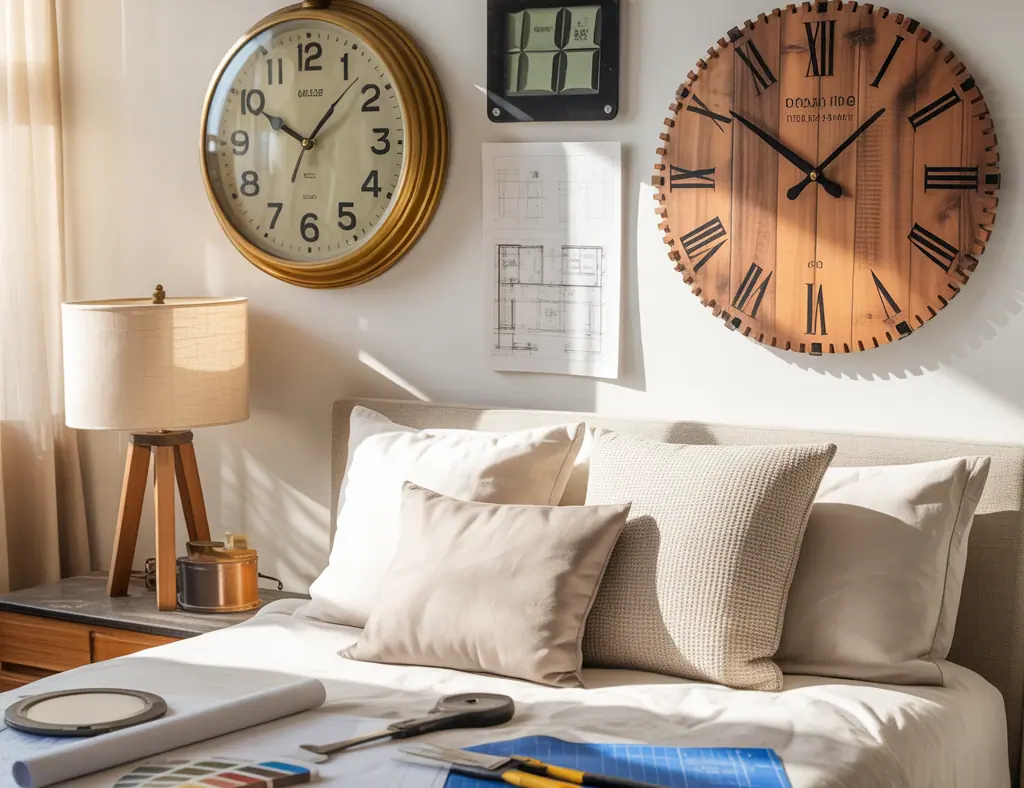
Ever stood in your bedroom, paint can open on the dresser, debating whether that blank wall needs an oversized print, a floating shelf—or a clock that actually suits the space? Choosing the right timepiece is one of those small home improvement decisions that instantly elevates a room’s function and style. Whether you’re tackling a weekend DIY or refreshing your master suite, these bedroom clocks suggestions will help you pick, place, and even build the perfect clock for your sleep sanctuary.
Why the right clock matters in a bedroom
A clock in the bedroom is more than a time-telling device. It can be a focal point, a bedside helper (alarm or no-alarm), or a subtle piece of ambient lighting. But size, sound, light level, and placement all matter—get one wrong and the clock becomes a nuisance instead of a design asset. Use the tips below to match function with style and keep your space calming and practical.
Top bedroom clocks suggestions for every style
Here are versatile categories and real-world advice to match clocks to bedroom design:
- Minimalist digital clocks: Slim profiles, soft LED dimming, and silent operation—great for modern bedrooms and nightstand placement.
- Classic analog wall clocks: Large face, quiet sweep movement, and bold numbers for a traditional, cottage, or Scandinavian feel.
- Projection clocks: Project time onto the ceiling—perfect for those who prefer not to turn or sit up to check the time at night.
- Smart clocks: Integrate with smart home systems, offer customizable alarms, and double as speakers or ambient light sources.
- Vintage and upcycled clocks: Add character with flea-market finds or refurbished pieces—ideal for eclectic and boho bedrooms.
Size, scale, and placement tips
Measure wall space before buying: a clock should generally take up 20–30% of a focal wall area. Over-the-bed clocks require lower profiles to avoid visual crowding. For bedside tables, choose a clock that reads easily at arm’s length—display height and font size matter.
DIY clock projects to personalize your bedroom
If you love hands-on projects, these step-by-step DIY ideas are budget-friendly and highly customizable.
1. Photo-frame wall clock (Beginner)
- Materials: clock mechanism kit, large round MDF backing (or reclaimed wood), printed family photos or art, craft glue, clear coat.
- Step 1: Paint or stain the backing and arrange printed photos in a radial pattern, leaving the center for the clock hands.
- Step 2: Glue photos down, seal with a matte clear coat, and drill a center hole sized for the clock kit.
- Step 3: Install the clock mechanism, add hands, and hang at eye level. Use a quiet sweep movement if placed in a bedroom.
2. Industrial pipe wall clock (Intermediate)
- Materials: reclaimed wood plank, metal pipe fittings, clock kit, stencils for numbers, clear matte sealant.
- Step 1: Cut and sand the plank to your desired dimensions and stain it for depth.
- Step 2: Attach pipe fittings as decorative brackets and mount the clock mechanism centered on the plank.
- Step 3: Stencil numbers or use metal numerals for a rugged, loft-like look.
3. Backlit floating shelf clock (Advanced)
- Materials: floating shelf, slim LED strip with dimmer, clock face or digital module, power drill, cable channel.
- Step 1: Install a floating shelf above the bed or dresser and mount the LED strip along the underside.
- Step 2: Attach the clock face to the shelf’s front edge or sit a slim digital clock on the shelf, hiding wiring in the cable channel.
- Step 3: Use the dimmer to create soft ambient lighting that doubles as a nightlight.
Practical considerations before you buy or build
- Noise level: Look for “silent sweep” mechanisms—especially if you’re sensitive to ticking.
- Light control: Choose dimmable displays or adjustable backlights to avoid sleep disruption.
- Power source: Battery-powered clocks avoid visible cords; plug-in smart clocks offer more features but need neat cable routing.
- Alarm needs: If you prefer gentle wake-ups, pick a clock with progressive alarms or vibration capabilities for bedside placement.
- Maintenance: Consider battery access and dusting—open-faced clocks require simple upkeep.
Design inspiration: blending clocks into bedroom decor
Match materials and finishes: matte black hands suit industrial themes; brass or gold accents warm up neutral palettes. For coastal rooms, weathered wood or rope details complement the aesthetic. Use a cluster of small clocks on a gallery wall for a layered look, or keep one large statement clock as the room’s anchor.
Where to place it: bedside, wall, or shelf?
Consider line of sight and function. Bedside clocks should be readable from the pillow without bright light. Wall clocks work as focal points above dressers or headboards. Shelf clocks offer flexibility—combine with plants or a stack of books to create a styled vignette.
Frequently Asked Questions
1. What is the best type of clock for a bedroom?
The best bedroom clock depends on your priorities. For minimal disruption, choose a silent sweep analog clock or a digital clock with an adjustable, dimmable display. If you want smart features, choose a smart display with sleep-friendly settings. Always check decibel ratings and light intensity before purchase.
2. How big should a bedroom wall clock be?
For a focal wall, aim for a clock diameter that occupies roughly 20–30% of the wall area within the focal zone. For above-dresser placement, a 20–30 inch clock often works, while smaller 10–14 inch clocks suit bedside nooks.
3. How do I make sure my clock won’t disturb my sleep?
Pick a clock with a silent movement, dimmable or no display lights, and place it out of direct view of your sleeping position. If you need an alarm, choose gentle wake-up settings or vibration-based alarms. For total darkness, position the clock so the display faces away or use blackout curtains to minimize ambient glow.
Conclusion — Choose a clock that fits your life and your style
These bedroom clocks suggestions show that the right timepiece can be practical, beautiful, and a fun DIY project. Start by measuring your space, deciding on the features you actually need (silent movement, alarm, backlight), and picking a style that complements your room. Try one of the simple DIY projects above to create a custom piece that tells time and tells your story.
Ready to update your bedroom with a clock you love? Browse our project ideas and home design tips to get started: DIY projects, home design ideas, or consider complementary upgrades in other rooms like kitchen upgrades to keep the momentum going.