Have you ever stood in your unfinished basement, stared up at the joists and ductwork, and wondered if you had to choose between a boxed-in drop ceiling or an expensive finish? If you’re tackling a weekend renovation and want a modern, budget-friendly look that still allows access to pipes and wiring, you’re in the right place. These basement exposed ceiling design ideas show how to turn that industrial jumble into a polished feature — without blowing your budget.
Why Choose an Exposed Basement Ceiling?
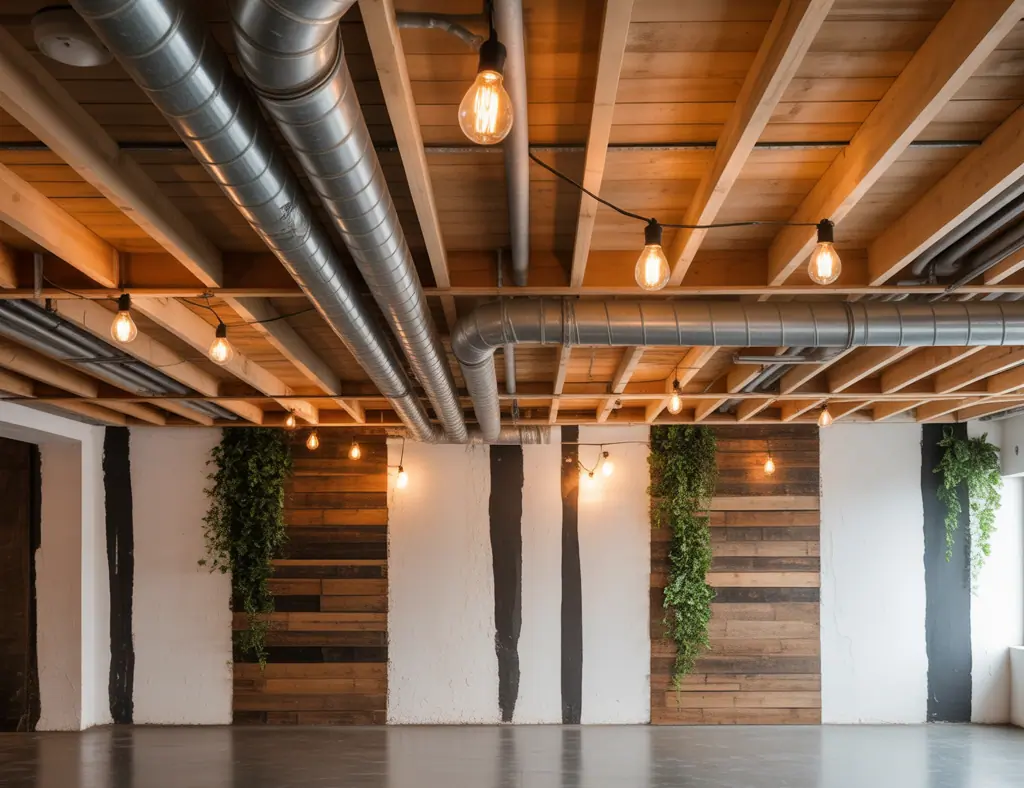
Leaving your basement ceiling exposed (or finishing it with an open-ceiling approach) can be a smart aesthetic and practical choice. It creates height, allows easy access for repairs, and suits modern-industrial and farmhouse interiors. Plus, with paint and strategic lighting, an exposed ceiling becomes a design statement rather than an eyesore.
Top Exposed Ceiling Styles to Consider
1. Painted Joists — Brighten and Unify
One of the simplest treatments is to paint the exposed joists, pipes, and ducts. A solid color (matte black for drama, charcoal for warmth, or white for brightness) visually unifies disparate elements.
- Pros: Inexpensive, fast, retains full access, hides grime.
- Cons: May require repainting over time; acoustics can be an issue.
2. Stained Beams for a Rustic Look
If your joists are wood and in decent shape, sanding and staining them gives a cozy, cabin-like feel. Pair used lumber tones with warm lighting and area rugs to make the space inviting.
3. Exposed Insulation with Fabric or Baffles
Thermal and sound insulation can be integrated into the look using fabric wraps or acoustic baffles. This approach improves sound control while maintaining an industrial vibe.
4. Drop-in Slatted Panels (Partial Coverage)
For a hybrid solution, use wood or metal slatted panels between joists. They preserve the open look while softening the industrial elements and helping with acoustics.
How to Plan Your Basement Exposed Ceiling Project (Step-by-Step)
Follow these practical steps to go from messy to modern:
- Inspect and Prepare: Check for leaks, pest issues, and exposed wiring. Address plumbing or HVAC repairs before any cosmetic work.
- Measure and Map: Sketch the ceiling layout, locating joists, major ducts, lighting, and HVAC components. This map is essential for planning paint runs or panel placement.
- Choose a Treatment: Decide between painting, staining, baffles, or partial slats based on budget and desired style.
- Gather Materials & Tools: Typical items include primer, high-quality ceiling paint (spray or roller), drop cloths, ladders, respirators, painter’s tape, wood stain/finish, acoustic panels, and fastening hardware.
- Prep the Area: Cover floors and furniture. Turn off circuits when working near electrical fixtures.
- Apply Treatment: Paint or stain in sections. For painting, use a sprayer for fast, even coverage if possible; rollers work for joist faces. Install baffles or slats after painting for a tidy finish.
- Install Lighting and Trim: Add suspended track lighting, recessed trims, or industrial pendants. Proper lighting transforms the ceiling into a feature.
- Finish and Inspect: Touch up any spots and ensure mechanical systems are still accessible and functioning.
Practical DIY Tips and Safety Advice
- Wear a respirator and eye protection when sanding or spraying paint — basements can trap fumes.
- Test a small area with your chosen paint or stain to confirm the color and absorption.
- Use a matte finish to hide imperfections; gloss will highlight flaws.
- Install removable panels or hinged sections around frequently serviced equipment for easier access.
- For sound control, combine acoustic insulation with decorative elements like fabric baffles or cork tiles.
- Consider LED low-profile fixtures to keep the ceiling feeling open while providing ample light.
Design Inspiration: Matching Your Basement Style
Think about the room’s function and coordinate finishes:
Home Theater
Use black-painted joists and acoustic baffles to reduce reflections and create a cozy cinema feel. Dimmable recessed lights and cove LED strips add ambiance.
Game Room or Workshop
Choose durable, easy-to-clean finishes. Exposed metal ductwork brushed to a uniform finish pairs well with pegboards and industrial lighting.
Guest Suite or Finished Living Space
Opt for painted white or warm stained wood to keep a comfortable, residential feel. Add visual warmth with textiles and area rugs.
Budget Considerations and Cost-Saving Tips
Exposed ceiling designs are often more cost-effective than full drywall ceilings because they require fewer materials and less labor. To save money:
- Do the prep and painting yourself. Sprayers rent cheaply and speed up the job.
- Prioritize problem fixes (leaks, insulation) before cosmetic upgrades.
- Repurpose reclaimed wood or inexpensive metal slats for decorative elements.
Basement Exposed Ceiling Design Ideas — Real-World Examples
Here are a few affordable combos people use:
- Matte black spray paint + industrial pendant lights + area rugs = sleek home bar.
- White-painted joists + recessed LED downlights + fabric-covered insulation = bright guest room.
- Stained beams + acoustic baffles + warm bulbs = cozy family den.
Frequently Asked Questions
1. Is it legal to leave my basement ceiling exposed?
Local building codes vary. Exposed ceilings are commonly allowed, but mechanical systems must meet safety and fire-code requirements. Always check local regulations and consult an electrician if altering wiring or fixtures.
2. How do I control sound with an exposed basement ceiling?
Use acoustic insulation wrapped in fabric, hang baffles between joists, or install cork/wood slats that absorb sound. Soft furnishings and rugs also help reduce echo.
3. Can I install recessed lighting with an exposed ceiling?
Yes — you can mount surface-mount LED fixtures, track lighting, or convert recessed cans to surface-mounted options designed for exposed joist installations. Ensure wiring is secured and accessible for future maintenance.
Conclusion: Transform Your Basement with Intentional Exposed Ceiling Design Ideas
Basement exposed ceiling design ideas offer a flexible, cost-effective way to transform an unfinished space into a stylish, functional room. Whether you choose painted joists, stained beams, or acoustic baffles, the key is planning: address mechanical issues first, pick finishes that suit the room’s purpose, and use lighting to highlight the look. Ready to start your project? Explore more DIY projects for tools and step-by-step guides, browse creative home design ideas, or get inspired by small renovation tips from our kitchen upgrades page to carry style through your whole house. Don’t wait — take one small weekend step and give your basement a fresh, open-ceiling makeover.