Ever stared at a finished basement and thought, “This could be a cozy guest room — if only it had a window”? Converting a dark, windowless basement into a comfortable bedroom is one of the most rewarding home improvement projects you can tackle. With clever lighting, smart ventilation, and a few DIY upgrades, a windowless room can feel bright, safe, and inviting. In this guide I’ll show practical, step-by-step ideas to transform a basement bedroom without windows into a functional, stylish space that guests and family will love.
Why a windowless basement bedroom can work — and what to consider first
Basements often have better ceiling height and square footage than small above-ground rooms, but a lack of natural light and egress concerns are real. Before you start decorating, think about safety, moisture control, and comfort:
- Building codes and egress: If you plan to use the room as a permanent bedroom, local codes may require an egress window or door. Check your municipality or consult a contractor. Consider a sleeping room vs. guest or media room distinction.
- Moisture and waterproofing: Basements can be damp. Address any leaks, install a vapor barrier, and use moisture-resistant drywall and flooring.
- Ventilation and air quality: Proper HVAC connection, an ERV/HRV, or a dedicated supply/return vent will keep air fresh and control humidity.
Quick safety checklist
- Confirm egress requirements (window well or exterior door) if used as a permanent bedroom.
- Install smoke and carbon monoxide detectors.
- Use mold-resistant materials and keep humidity below 50% with a dehumidifier.
Design principles for a windowless basement bedroom
Designing a windowless bedroom is about illusion and comfort — creating the sense of light and air where there’s none. Apply these core principles:
- Light layering: Combine ambient, task, and accent lighting to mimic daylight cycles.
- Reflective surfaces: Light-colored paint, gloss accents, and mirrors amplify light.
- Texture and depth: Rugs, textiles, and layered furnishings prevent a flat, cave-like feel.
- Zone the space: Use built-ins or furniture to create sleeping, lounging, and storage zones.
Lighting tips that change everything
- Install recessed LED downlights on dimmers for even ambient light.
- Add wall sconces or adjustable swing-arm lights near the bed for task lighting.
- Use backlit headboards or LED “sky” panels to simulate windows or skylights.
Basement bedroom ideas without windows: DIY projects and step-by-step improvements
Below are practical, hands-on projects you can tackle over weekends to transform your basement bedroom. Some are low-cost; others require contractor help.
1. Build a faux window with backlit panel (DIY)
- Frame a shallow recessed area in the wall (4–6 inches) using plywood or MDF.
- Install a high-quality LED backlight panel or LED tape with a diffuser sheet.
- Add a light, airy curtain or slatted blinds in front of the panel for realism.
- Optional: Use a printed scenic film or framed photo mount behind the diffuser for a “view.”
2. Upgrade lighting and electrical (small contractor help recommended)
- Plan a layered lighting layout: ambient (recessed), task (sconces), accent (LED strips).
- Use warm white LEDs (2700–3000K) to create a cozy atmosphere; include dimmers.
- Install smart switches or timers for automated lighting scenes that mimic morning and evening light.
3. Improve air quality and humidity control
- Connect the bedroom to your home HVAC with a dedicated return vent or add an inline fan.
- Install an ERV/HRV if budget allows to bring in filtered outdoor air without energy loss.
- Use a quiet dehumidifier and place a humidity monitor to prevent mold risk.
4. Add built-ins and low-profile furniture
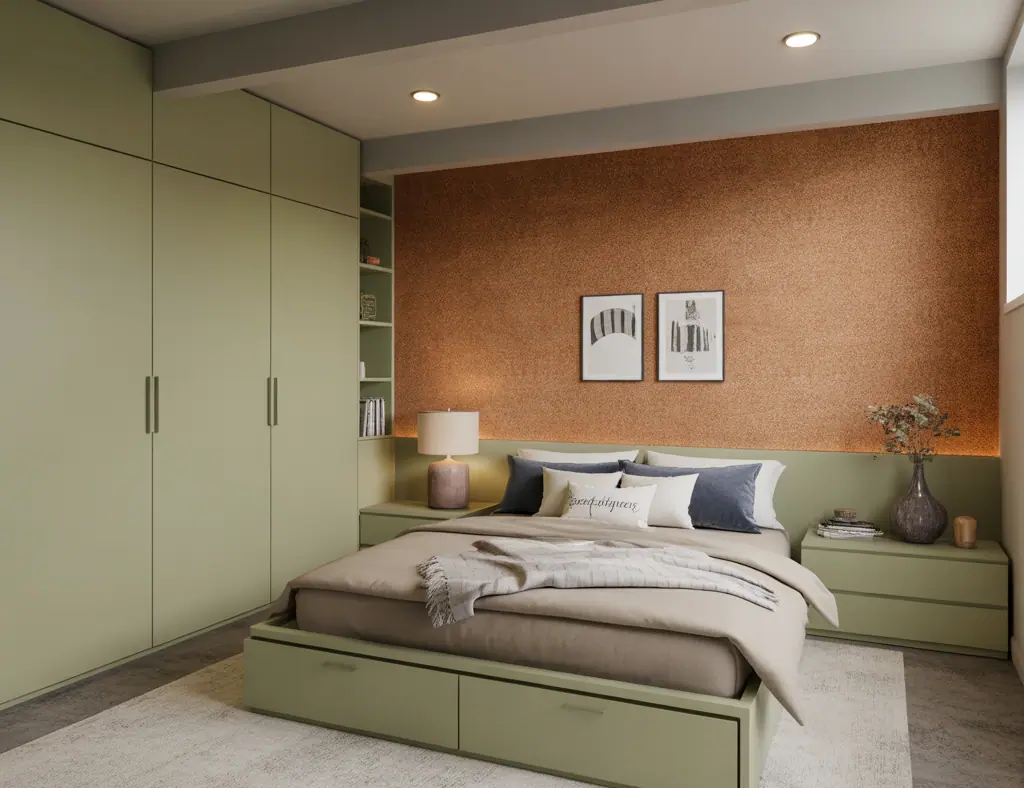
Custom shelving, built-in storage under a raised platform bed, and wall-mounted nightstands free up floor space and keep the room feeling open. Consider a Murphy bed or sleeper sofa if the room doubles as an office or media room.
10 practical decor and layout ideas
- Use soft, light paint colors — warm whites, pale grays, or muted pastels.
- Create a focal wall with a mural, textured wallpaper, or a gallery of art to distract from the lack of windows.
- Install large mirrors across from light sources to reflect and multiply light.
- Layer rugs to add warmth and sound absorption.
- Use concealed LED strips behind crown molding or under floating shelves for a soft glow.
- Add a small seating nook or reading corner with a lamp to make the room multifunctional.
- Choose low-profile beds and furniture to increase perceived ceiling height.
- Soundproof with acoustic panels or dense insulation to make the space restful.
- Incorporate lots of plants suited to low light or use high-quality artificial plants for greenery.
- Consider an egress window installation if you want a permanent, code-compliant bedroom (professional excavation and permit work required).
Real-world advice: budget, contractors, and maintenance
Budget realistically: cosmetic fixes (paint, lighting, mirrors) can be under $1,000. Ventilation, electrical upgrades, or egress windows quickly raise costs—plan $2,000–$15,000 depending on scope. Get multiple quotes, check references, and always ask about permits for structural or egress work.
Maintenance tips:
- Run the dehumidifier regularly and inspect for moisture after heavy rains.
- Test smoke and CO detectors monthly.
- Keep HVAC filters clean and schedule annual duct/vent checks.
Frequently Asked Questions
1. Can you legally make a basement bedroom without windows?
It depends on local building codes. Many jurisdictions require an egress window or exterior door for a room classified as a bedroom. For occasional guest use, some homeowners opt for a “sleeping room” or den classification, but you should confirm requirements with local authorities or a contractor to avoid safety and resale issues.
2. How can I make a windowless room feel brighter on a budget?
Start with light paint colors, add mirrors, swap in brighter LED bulbs, and layer lighting with floor or table lamps. A faux window panel with LED backlighting is an affordable weekend DIY that dramatically changes the feel.
3. What’s the best flooring for a basement bedroom?
Choose moisture-resistant options: luxury vinyl plank, engineered hardwood (with a vapor barrier), or sealed concrete with area rugs. Avoid solid hardwood in damp basements unless moisture issues are fully addressed.
Conclusion — Start transforming your basement bedroom without windows today
Converting a windowless basement into a comfortable bedroom is entirely possible with thoughtful design, safety-first planning, and a few smart DIY upgrades. From faux backlit windows and layered lighting to ventilation improvements and built-in storage, these basement bedroom ideas without windows will help you create a bright, cozy, and code-aware sleeping space. Ready to get started? Try a weekend faux-window project, then tackle lighting and HVAC upgrades as your next steps. For more inspiration and step-by-step projects, check out our DIY projects and browse other home design ideas. If you’re thinking about a larger remodel, consider consulting a contractor to discuss egress options and permitting.
Want tailored advice for your basement layout? Leave a comment or describe your space and I’ll suggest the best first project to transform it.