Ever stood in your basement staring at an empty wall and thought, “This would be perfect for a bar”? Whether you’re tackling a weekend DIY or planning a full basement remodel, turning that leftover space into a welcoming bar area is one of the most rewarding home improvement projects. If you’re hunting for basement bar table inspiration, this guide offers practical design ideas, step-by-step DIY tips, and real-world advice to create a functional and stylish bar that fits your budget and space.
Why Add a Basement Bar Table?
Basements are prime real estate for social spaces—away from the TV noise, with privacy for guests, and often with flexible layout options. A dedicated basement bar table can:
- Create a focal point for parties and casual gatherings.
- Add resale value and functionality to an underused room.
- Offer a compact workspace that doubles as a serving area or game table.
Practical considerations before you start
- Check ceiling height and clearances for bar stools and overhead lighting.
- Address moisture and insulation—use treated or moisture-resistant materials for basement furniture.
- Plan for electrical outlets, lighting, and possibly a mini-fridge or sink if you want a wet bar.
Basement Bar Table Inspiration: Styles and Trends
Here are several trending design directions to help you visualize the perfect basement bar table:
Industrial Chic
- Metal hairpin legs, reclaimed wood top, exposed pipe shelving.
- Perfect for urban loft vibes or a man-cave aesthetic.
Rustic Reclaimed Wood
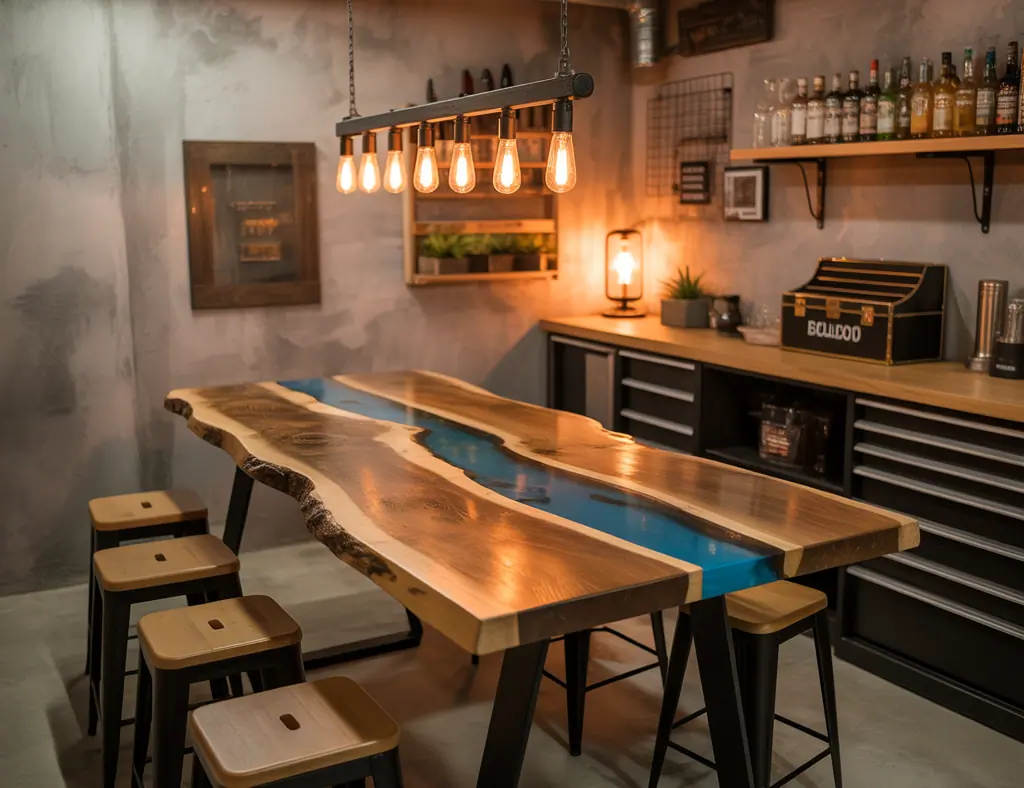
- Rough-sawn planks finished with a durable clear coat or epoxy for durability.
- Works well with warm pendant lighting and leather bar stools.
Modern Minimalist
- Floating bar table with clean lines, matte finish, and integrated LED strips.
- Great for small basement bar ideas where space is limited.
Multi-Use Fold-Down Table
- Hinged bar top that folds against the wall when not in use—ideal for flexible spaces.
DIY Basement Bar Table Plans: Step-by-Step Build
If you’re comfortable with basic woodworking, building your own basement bar table is an achievable weekend project. Below is a straightforward plan for a simple, sturdy bar table roughly 72″ long and 42″ high.
Materials and tools
- 2x pine or oak boards (for a 72″ top) or a 72″ pre-cut butcher block
- 4 metal or wooden legs (bar height ~42″)
- Screws, wood glue, sandpaper (120-220 grit), wood filler
- Finish: stain + polyurethane or epoxy resin for a glossy, durable top
- Tools: drill, circular saw or miter saw, sander, tape measure, level
Step-by-step guide
- Measure your space and confirm the bar length and height are comfortable—bar stools typically need ~12″ of knee clearance.
- Cut the top boards to length and join them edge-to-edge with wood glue and screws or use a single butcher block top for ease.
- Sand the top smooth, tipping between grits for a professional finish.
- Attach legs centered under the top using corner brackets or metal leg plates. For added stability, add a stretcher between legs.
- Apply stain or epoxy finish. If using epoxy, follow product cure times and work in a dust-free area.
- Install any under-counter features like shelves, wine glass racks, or LED light strips.
- Place on the final spot and level the table—use shims on uneven basement floors if needed.
Basement Layout, Lighting, and Storage Tips
How you place the table determines how the space will function. Consider these smart layout and lighting strategies:
- Position the table near an electrical outlet if you plan on a fridge or lighting. If none exists, consider hiring an electrician to add one.
- Use layered lighting: overhead pendants for task lighting, wall sconces for ambiance, and LED strips under shelves for accent light.
- Incorporate vertical storage—narrow cabinets or open shelving saves floor space and keeps glassware within reach.
- For low ceilings, choose low-profile pendants or flush-mount fixtures to avoid a cramped feel.
Finishing Touches: Decor, Seating, and Sustainability
Small details elevate a basement bar table from functional to memorable. Consider:
- Bar stool height: standard bar height is 42″, so choose stools with ~30″ seat height.
- Durable finishes: epoxy or marine varnish protects wood from spills and humidity typical in basements.
- Eco-friendly materials: reclaimed wood or salvaged metal keeps costs down and adds character.
- Personal touches: a chalkboard menu, vintage signage, or a curated glassware display creates personality.
Moisture and Basement-Specific Advice
Basements can be humid or slightly damp. Protect your bar table with these real-world tips:
- Seal concrete floors and ensure proper drainage to reduce humidity problems.
- Use pressure-treated or kiln-dried wood, or apply an appropriate moisture-resistant finish.
- Keep a dehumidifier in the room during humid months to protect wood furniture and electronics.
Frequently Asked Questions
1. What height should a basement bar table be?
The most common bar table height is 40–42 inches. If you prefer a counter-style feel, 36 inches is standard. Match stool height to the table—stools should provide about 10–12 inches of knee clearance below the tabletop.
2. Can I use reclaimed wood for a basement bar table?
Yes—reclaimed wood is a great option for character and sustainability. Make sure it’s free of rot or pests, and seal it properly with epoxy or polyurethane to protect against basement humidity and spills.
3. Do I need permits to install a wet bar in my basement?
If your project involves plumbing or adding new electrical circuits for a refrigerator or undercounter lighting, check local codes—permits may be required. Simple, dry-bar tables that don’t alter plumbing or wiring generally don’t need permits.
Final Thoughts and Call to Action
If you’ve been searching for basement bar table inspiration, now’s the time to sketch a plan, gather tools, and try a DIY build. Start small with a fold-down or butcher-block top bar, then add shelving and lighting as your space develops. Share your progress, ask questions, or explore more hands-on ideas on our DIY projects page. For design continuity, check related tips on kitchen upgrades and additional layout ideas on our home design ideas page.
Ready to make your basement the next entertaining hotspot? Grab a sketchbook, pick a style that matches your home, and let this basement bar table inspiration guide your next weekend project. If you want personalized tips for your space, leave a comment or send a photo—let’s build something great together.