Have you ever stood by your backyard pool during a summer BBQ and thought, “This space needs something more”? Maybe the plain concrete edge feels sterile, or the kids want a cooler focal point than floating toys. A backyard pool waterfall concept can be the upgrade that changes the whole vibe — bringing sight, sound, and movement to your outdoor living area. In this post I’ll walk you through real-world design ideas, DIY steps, budget tips, and maintenance advice so you can bring that cascading water feature to life.
Backyard pool waterfall concept: Why it transforms your outdoor space
A well-executed pool waterfall does more than look pretty. It adds sensory appeal with the calming sound of flowing water, masks neighborhood noise, creates microclimate cooling on hot days, and can increase property value. Whether you want a natural rock cascade, a modern blade waterfall, or a subtle spillway, the right concept can make your pool the center of attention for family gatherings, evening swims, and quiet afternoons.
Popular waterfall styles and design inspiration
Natural rock waterfalls
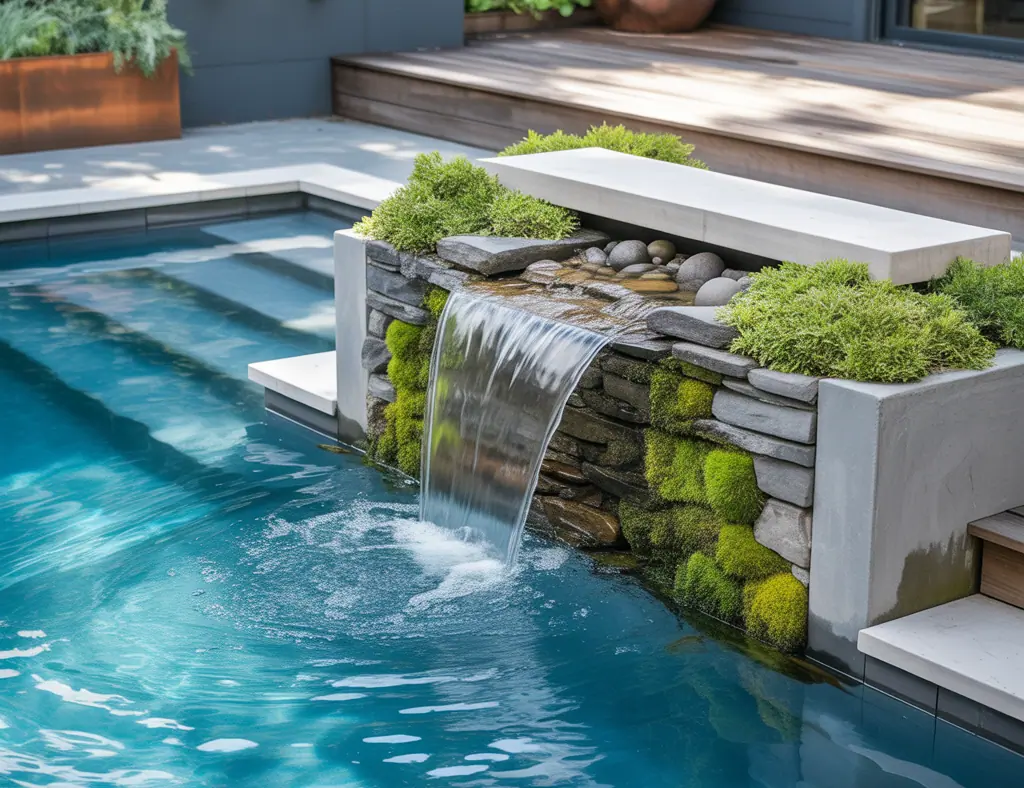
Naturalistic waterfalls use stacked boulders and stone veneers to mimic a creek or lagoon. They’re great for tropical or rustic backyard themes and provide built-in seating nooks and niches for underwater lighting.
Sheet or rain curtain waterfalls
Sheet waterfalls create a flat, glass-like cascade across the width of a spout. They’re elegant for modern pools and produce a softer, uniform sound than rock falls.
Spillways and scuppers
Spillways pour water through a narrow opening for a striking visual line. Scuppers built into low walls can create multiple thin streams — excellent for adding texture and rhythm to the pool edge.
Contemporary blades and waterfalls
Stainless steel or glass blade waterfalls offer crisp lines and a sleek aesthetic, and they integrate nicely with minimalist landscapes and concrete decking.
Practical DIY tips and step-by-step improvement ideas
Here’s a realistic, step-by-step guide you can follow if you want to DIY a simple pool waterfall feature. Note: always check local codes and consider hiring a pro for electrical or structural work.
- Plan and sketch your concept. Decide style (rock, blade, spillway), size, and placement — near the shallow end or as a focal wall. Consider sightlines from the patio and house.
- Check utilities and permits. Mark underground lines and confirm whether permits are required for plumbing or electrical additions.
- Select a pump and plumbing layout. Waterfall pumps are sized by gallons-per-hour (GPH) and head height. For most small falls, a 2,000–6,000 GPH pump works; larger or taller features need more capacity. Include a dedicated return line to the pool filtration system or a separate recirculating loop.
- Build the foundation. For rock waterfalls, construct a reinforced concrete or compacted gravel base. For blades or spillways, install a steel or pressure-treated framing anchored to concrete or block walls.
- Install plumbing and check for leaks. Use schedule 40 PVC, install isolation valves, and test the line with water pressure before finishing the surface.
- Wire the pump and lighting safely. All electrical work should be GFCI-protected and follow local code. Hire a licensed electrician if you’re not experienced.
- Finish with stone, tile, or veneer. Use marine-grade mortar and waterproofing where water contacts the structure. Add LED lights for night appeal.
- Balance water chemistry and test flow. Run the feature for at least 24–48 hours and monitor for splashing, backflow, or algae build-up.
DIY tip: Start small. A compact rock spillway or a single blade waterfall is a good first project that minimizes plumbing and cost while offering dramatic effect.
Materials, budget, and ongoing maintenance
Budget varies widely: a basic DIY spillway might run $1,000–$3,000; a full rock cascade with heavy boulders and professional installation can be $8,000–$30,000+. Key cost items include:
- Pumps and plumbing (20–30% of budget)
- Stone, tile, or metal hardware
- Labor, if you hire pros
- Electrical and lighting
- Waterproofing and sealants
Maintenance considerations:
- Keep leaves and debris clear — waterfalls can clog easily.
- Monitor pump strain and clean impellers regularly.
- Winterize in cold climates by draining lines or using antifreeze-rated systems.
- Balance pool chemistry — additional aeration from falling water can affect chlorine and pH.
Placement and landscaping ideas to complement your waterfall
Think beyond the waterfall itself. Surrounding plants, lighting, and seating complete the scene.
- Use native, low-maintenance plants and ornamental grasses to frame the rocks and soften edges.
- Incorporate LED uplights to highlight the falls at night and add color-changing options for parties.
- Create a seating area with weatherproof sofas and a fire pit nearby for a year-round entertaining zone.
- Blend the waterfall into hardscaping — natural stepping stones or a path can connect the pool to other landscape zones.
When to hire a professional
You can DIY many parts of a small waterfall, but consider hiring licensed pros if you need:
- Significant structural changes to pool walls or decking
- Permitted plumbing or electrical work
- Complex hydraulic engineering for very large or multiple cascades
- Heavy boulder placement requiring machinery
Working with a landscape contractor or pool builder can also get you accurate pump sizing, reliable waterproofing, and long-term warranties.
Frequently Asked Questions
How much does a backyard pool waterfall cost to install?
Costs vary depending on size, materials, and labor. Small DIY spillways can cost $1,000–$3,000. Mid-range rock or blade waterfalls with some professional help often fall between $4,000–$12,000. Large, custom cascades with heavy stonework and lighting can exceed $20,000. Always include a contingency for unforeseen site work.
Can I add a waterfall to an existing pool?
Yes — many homeowners retrofit waterfalls to existing pools. Key steps are assessing structural support, routing plumbing to the pump, and ensuring the filtration and pool pump can handle the additional flow or adding a dedicated recirculation pump.
Will a waterfall increase my pool maintenance?
Slightly. Waterfalls introduce more aeration and can lead to faster chemical changes, so you may need to test your pool chemistry more frequently. Debris can collect in the spillway or weep lines, so occasional cleaning is necessary. Properly sized equipment and good design minimize added maintenance.
Ready to bring this idea to life? Start by sketching a simple plan, measuring the area around your pool, and checking utility locations. If you want more project inspiration and step-by-step guides, check out our DIY projects and browse our home design ideas for layout and material suggestions. If your kitchen could use an upgrade while you’re at it, you can also explore kitchen upgrades to refresh your whole home.
Conclusion — Make your backyard pool waterfall concept a reality
A backyard pool waterfall concept is a high-impact upgrade that combines beauty, sound, and ambiance — and it’s achievable whether you’re a confident DIYer or prefer hiring pros. Start small if you’re experimenting, plan carefully for plumbing and electrical needs, and integrate lighting and landscaping for maximum effect. If you’ve been dreaming of that backyard oasis, today is a great day to sketch your idea and take the first step toward a cascading centerpiece that your family and guests will love.
Call to action: Love this concept? Grab a notepad, sketch your ideal falls, and try a small DIY spillway this weekend — then share your progress or questions with our community for feedback and tips.