Ever stood in your backyard, dreaming of a low-maintenance retreat but felt overwhelmed by choices—grass that won’t stop needing water, mulch that washes away, or expensive pavers that blow the budget? If you’re asking, “How can I get a beautiful, durable yard that doesn’t take all my weekends?” then backyard landscaping with river rock could be the practical, stylish solution you need.
Why Choose River Rock for Your Backyard
River rock, river stones, and pea gravel are popular for good reason. They offer a natural, polished look while solving real garden problems. Consider river rock if you want:
- Durability: River rock won’t decompose like wood mulch and can last for years.
- Improved drainage: Use river rock in low spots or alongside gutters to reduce erosion.
- Low maintenance: Minimal weeding and no annual replacement like organic mulches.
- Versatility: Create dry creek beds, stone pathways, borders, and accent areas.
- Aesthetic appeal: Smooth, rounded stones add texture and a calming, natural look.
Design ideas for backyard landscaping with river rock
Here are creative, implementable river rock landscaping ideas for backyard spaces of any size.
Dry creek bed for drainage and visual interest
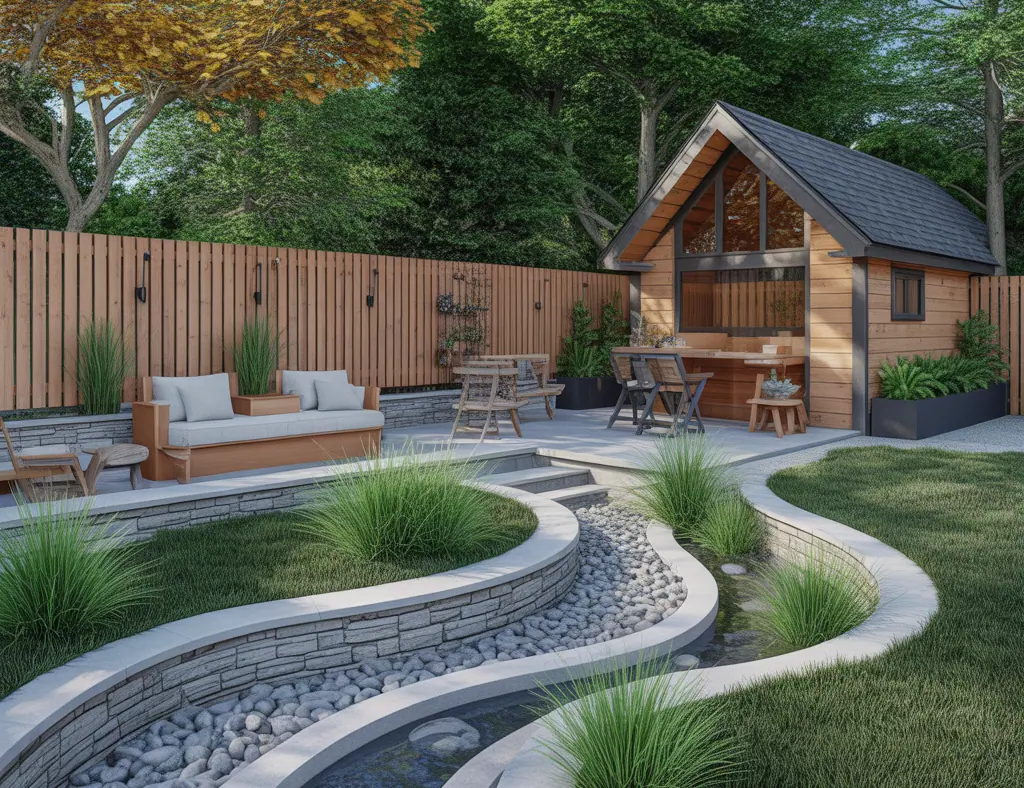
A dry creek bed is both decorative and functional. Lay a shallow trench, install landscape fabric, and fill with mixed-size river rock to mimic a natural stream. This directs water runoff away from foundations while adding a focal element to the yard.
Rock gardens and succulent beds
Combine river rock with drought-tolerant plants (sedum, agave, lavender) for a low-water rock garden. Use larger boulders as anchors and scatter smaller pebbles to create contrast. This is perfect for xeriscaping or front-yard curb appeal.
Pathways and stepping stones
- Create a winding path with stepping stones set in river rock for a cottage-garden feel.
- Use compacted sand or crushed stone beneath the river rock for stability.
Patio edging, borders, and seating areas
Define garden beds with a border of river rock to prevent grass intrusion. For patio perimeters, stones provide a visually soft transition between pavers and planting beds. A small fire pit area surrounded by river rock reduces dust and weed growth.
Step-by-step DIY: Installing a river rock pathway
This simple project gives an immediate upgrade with basic tools.
- Plan and measure: Mark your path with spray paint or rope. Measure length and width to estimate stone quantity.
- Gather materials: River rock (3/4″ to 1.5″ for a pathway), landscape fabric, crushed stone or sand, edging material, shovel, rake, tamper, and a wheelbarrow.
- Excavate: Dig down 3–4 inches below desired finished height. Remove roots and large rocks.
- Install edging: Use metal or plastic edging to keep stones contained and create clean lines.
- Install base: Lay 1–2 inches of crushed stone or coarse sand, compacting with a tamper for stability and drainage.
- Lay landscape fabric: Prevent weed growth while allowing water through.
- Add river rock: Spread the stones evenly to a depth of 2–3 inches. Rake smooth and check for evenness.
- Finish: Walk the path, add more stones as needed, trim edges, and enjoy.
Tip: Buy river rock in bulk from a landscape supply yard to save money. Ask for mixed sizes for a more natural look or uniform sizes for modern designs.
Maintenance tips & budget-friendly advice
- Weed prevention: Use a high-quality landscape fabric under the rock. For extra protection, add a layer of pre-emergent herbicide before laying stones.
- Refill periodically: Over years, stones may settle—topping up every 3–5 years keeps areas looking fresh.
- Cleaning: Remove leaves and debris with a leaf blower on low or by hand to avoid scattering stones.
- Cost-saving hacks: Mix small and large stones—larger stones are cheaper by volume. Reuse stones from other parts of the property for accent pieces.
- Edge control: Install edging to keep stones from spilling into lawns and flower beds.
Landscaping considerations: drainage, plant pairing, and local factors
Before you start, think about water flow, slope, and plant compatibility.
- Drainage: River rock is excellent for areas that collect runoff. Use it with a perforated drain pipe for severe drainage issues.
- Plant selection: Pair rocks with plants that like well-drained soil—ornamental grasses, thyme, lavender, and succulents work well.
- Local climate: In freezing climates, make sure rocks don’t create ice hazards on paths—choose textures and colors that contrast with winter conditions.
- HOA and local codes: Check restrictions for visible front-yard rock landscaping. Some associations prefer plantings or approved rock colors.
Frequently Asked Questions
1. Will river rock stop weeds completely?
No material stops weeds 100%. However, using a good landscape fabric, adding a layer of crushed stone beneath, and maintaining a 2–3 inch depth of river rock greatly reduces weed growth and makes maintenance easier.
2. Is river rock better than mulch?
It depends on goals. River rock lasts much longer and improves drainage, while mulch enriches soil and is better for nutrient-hungry plants. For a low-maintenance landscape with good drainage, river rock is ideal; for vegetable beds or nutrient-rich flower beds, choose organic mulch.
3. How much river rock do I need for my yard?
Measure the area in square feet and decide the depth (2–3 inches for ground cover; 4–6 inches for pathways or high-traffic areas). Most suppliers provide calculators to convert cubic yards to square footage. As a rule, 1 cubic yard covers roughly 100 square feet at a 2–3 inch depth.
Conclusion: Start your backyard landscaping with river rock today
Backyard landscaping with river rock gives you a durable, attractive, and low-maintenance yard upgrade that works for small patios and full garden rewrites alike. Whether you build a dry creek bed, a pebble path, or a rock-bordered succulent garden, river rock offers versatility and long-term value. Ready to try it yourself? Check out our DIY projects page for more step-by-step guides and browse home design ideas for styling tips to match your aesthetic.
Grab your shovel, pick up bulk river rock, and transform that problem patch into a polished outdoor space this weekend. If you want, tell me your yard dimensions and I can help estimate materials and layout ideas to get you started.