Have you ever walked into your apartment and felt like the lighting makes everything look flat or harsh—especially when you’re trying to unwind after a long day or stage a cozy movie night? Whether you’re dealing with a single ceiling fixture in a studio or rental restrictions that ban permanent rewiring, transforming your space with smart apartment lighting design ideas is one of the fastest, most impactful DIY upgrades you can make.
Why lighting matters: small changes, big impact
Good lighting improves mood, highlights design details, and expands the perceived size of a room. For renters and homeowners alike, adopting layered lighting—mixing ambient, task, and accent sources—creates depth and versatility without a major renovation. Use this guide for practical, budget-friendly techniques and step-by-step DIY tips to elevate your lighting plan.
Apartment lighting design ideas
Here are tested techniques and inspiration for every zone in a small apartment—from living rooms and bedrooms to kitchens and home offices.
1. Start with a lighting plan (simple and fast)
- Map the zones: living, dining, work, sleep, cooking, and display areas.
- Assign functions: ambient (general), task (reading, cooking), and accent (art, plants).
- Choose color temperature: 2700–3000K for cozy zones, 3000–4000K for kitchens and workspaces.
- Decide brightness in lumens: 1,500–3,000 lumens for living areas total; 4,000–8,000 lumens for kitchens depending on size.
2. Layered lighting: ambient + task + accent
Layering is the secret to professional-looking results:
- Ambient: ceiling fixtures, flush mounts, track lighting, or a large floor lamp.
- Task: desk lamps, under-cabinet LED strips in the kitchen, and bedside reading lights.
- Accent: picture lights, small spotlights, LED tape to highlight shelves and alcoves.
DIY-friendly fixtures and rental-safe solutions
Not allowed to change wiring? No problem. These ideas are renter-friendly and often plug-and-play:
- Plug-in wall sconces and swing-arm lamps (no hardwiring needed).
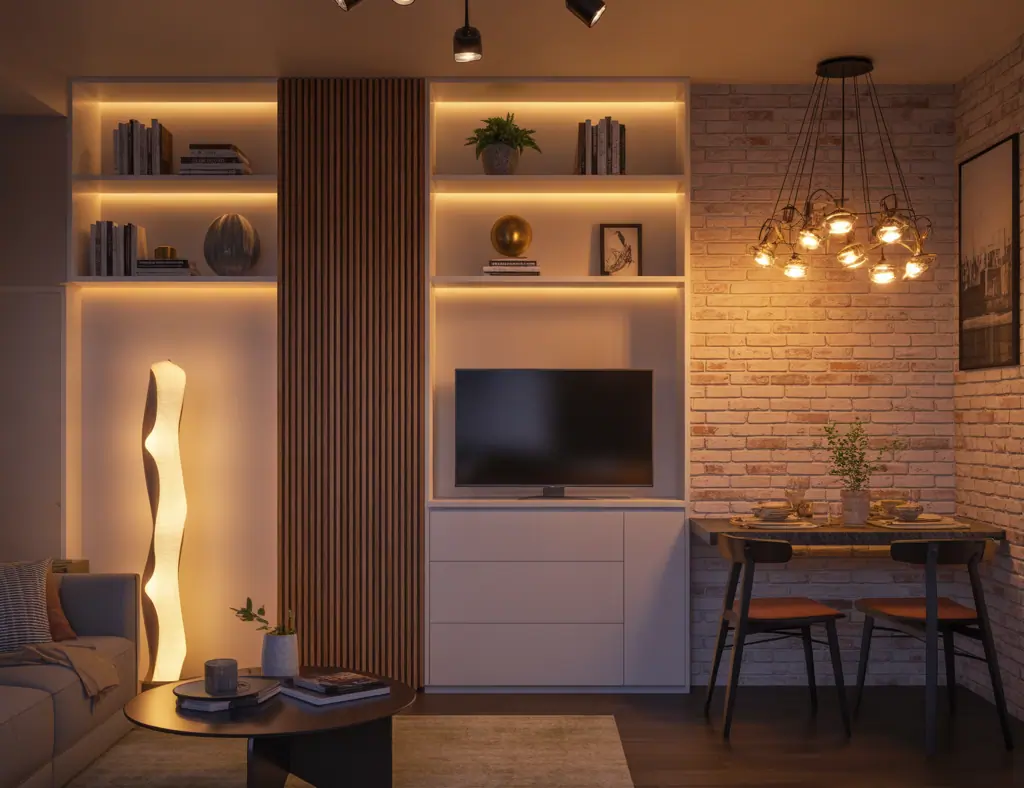
- LED strip lights with adhesive backing for shelves, cabinets, and behind TVs.
- Smart bulbs that fit existing fixtures—control warmth, brightness, and scenes via app.
- Clamp lamps and tripod floor lamps for flexible placement.
Step-by-step: Add under-cabinet LED lighting (DIY)
- Measure the cabinet run and choose the correct LED strip length.
- Clean the mounting surface and test-fit the strips; consider corner connectors if needed.
- Power options: use a nearby outlet, or install a plug-in transformer. For hardwired setups, hire a licensed electrician.
- Adhere strips, hide wiring with cable channels, and connect to power. Test and enjoy the even task light across counters.
Design inspiration by room
Living room — create the mood
- Combine a central pendant or flush mount with floor lamps behind sofas and table lamps on side tables.
- Use dimmable bulbs and smart scenes for movie nights versus reading time.
- Accent an art wall with adjustable picture lights or small track heads.
Bedroom — restful, layered lighting
- Install plug-in wall sconces on either side of the bed to free up nightstand space.
- Use warm 2700–3000K bulbs and dimmers for a soothing atmosphere.
- Add LED strips under the bed frame or behind the headboard for soft, indirect glow.
Kitchen — bright task lighting
- Prioritize under-cabinet LED strips and pendants over the island or dining table.
- Choose bright, cool-white light (3000–4000K) for food prep areas.
- Consider recessed or track lighting for adjustable, focused illumination.
Home office — focused productivity
- Select a desk lamp with adjustable color temperature to reduce eye strain.
- Position light to avoid glare on screens—left side for right-handed users, and vice versa.
- Supplement with overhead ambient light to reduce contrast and fatigue.
Practical tips, tools, and safety
For every DIY lighting upgrade, keep these real-world tips in mind:
- Bulb basics: choose LED bulbs for energy savings and longevity; check lumens for brightness, not watts.
- Color temperature: match bulbs in the same zone to avoid jarring color differences.
- Dimmers: ensure bulbs are dimmer-compatible; replace switches only if you’re comfortable with wiring or hire an electrician.
- Tools: tape measure, screwdriver, wire strippers (if hardwiring), cable clips, adhesive cable channels, and a stud finder for heavy fixtures.
- Safety: turn off power at the breaker before any electrical work and follow local building codes.
Budget ideas: big impact, low cost
- Swap bulbs to warmer tones and lower lumens for cozy evenings—an inexpensive mood reset.
- Use adhesive LED strips to backlight shelves or TV units; they’re cheap and instantly dramatic.
- Rearrange lamps and add mirrors to amplify existing light without buying new fixtures.
Frequently Asked Questions
Q: What are the best lighting solutions for small apartments?
A: Focus on layered lighting—use a mix of ambient, task, and accent sources. Choose space-saving fixtures like floor lamps, plug-in wall sconces, and LED strips. Smart bulbs and dimmers add functionality without taking up real estate.
Q: Can I install new lights in a rental apartment?
A: Yes, with renter-friendly options. Use plug-in fixtures, adhesive LED strips, and clamp lamps. For permanent hardwiring or recessed lighting, get landlord approval and hire a licensed electrician to meet code requirements.
Q: How do I pick the right bulb for my apartment?
A: Look at lumens for brightness and color temperature (Kelvin) for warmth. For living and bedroom areas aim for 2700–3000K; kitchens and workspaces often benefit from 3000–4000K. Pick LED bulbs with CRI 80+ for truer color rendering.
Conclusion — take action with these apartment lighting design ideas
Great lighting turns a bland apartment into a welcoming home. Start small: plan your zones, swap to LED bulbs, add a few accent lights, and try a plug-in sconce or under-cabinet strip this weekend. With the right combination of ambient, task, and accent lighting, you’ll dramatically improve comfort and style without a major renovation. Ready to get started? Browse simple DIY projects, explore smart fixtures in our home design ideas section, or find kitchen-specific lighting tips in kitchen upgrades. Share your before-and-after photos or ask a question below — I’d love to help you plan your next lighting upgrade!