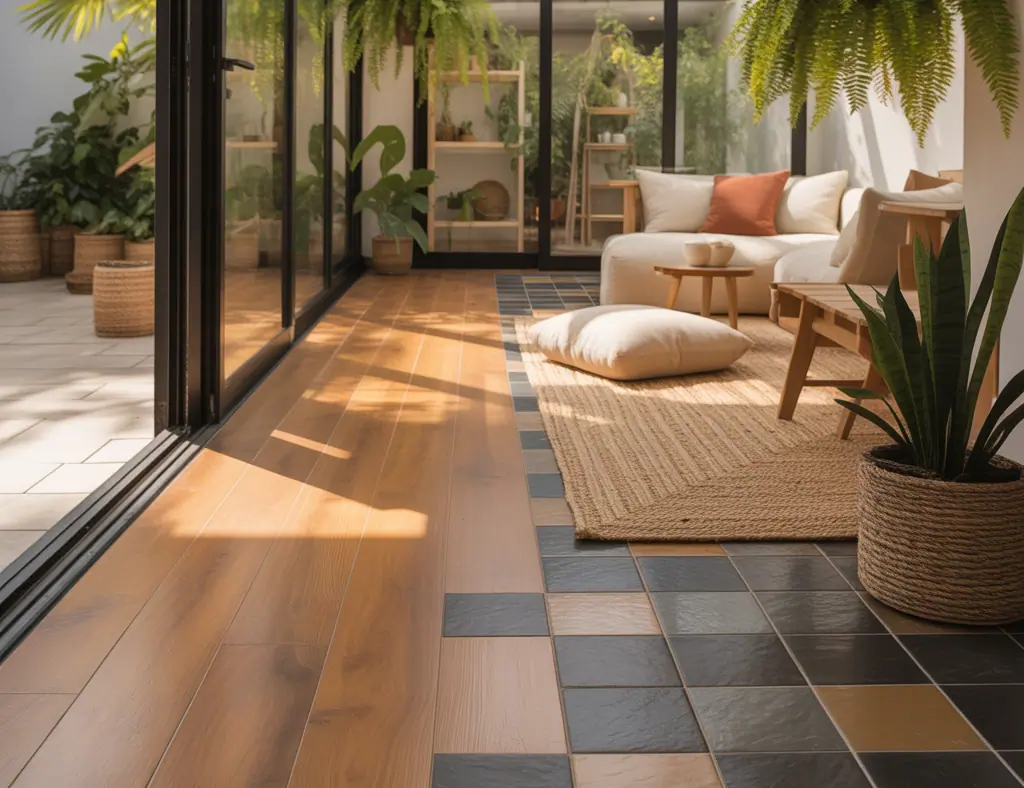
Ever stood in your chilly, underused sunroom wondering how to turn it into the cozy, functional space you pictured — without blowing the renovation budget? Whether you have a screened porch, an enclosed patio, or a light-filled sunroom, choosing the right floor makes the difference between a seasonal afterthought and a year-round favorite. This guide walks you through practical, attractive 3 season room flooring ideas you can install yourself or with minimal contractor help.
Why flooring matters in a 3 season room
Three-season rooms face a unique set of challenges: fluctuating temperatures, moisture from rain or snow tracked in on shoes, and lots of sunlight that can fade or warp materials. The best flooring for a 3 season room needs to be water-resistant, UV-stable, low-maintenance, and comfortable underfoot. It also should look great with your existing home design and furniture choices.
Top 7 3 season room flooring ideas (pros, cons, and DIY tips)
1. Luxury vinyl plank (LVP) — best all-around choice
Why it works: Waterproof, scratch-resistant, and available in realistic wood and stone looks. LVP clicks together for easy floating installations, making it a top pick for DIYers.
- Pros: Budget-friendly, simple installation, low-maintenance.
- Cons: Cheap thin vinyl can feel hollow; choose a quality product with a thick wear layer.
- DIY tip: Ensure the subfloor is flat and dry. Install a moisture barrier if the room is prone to dampness.
2. Porcelain or ceramic tile — durable and elegant
Why it works: Tile is impervious to water and holds up in sun and cold. Large-format porcelain tiles mimic natural stone without the maintenance.
- Pros: Long-lasting, easy to clean, many style options.
- Cons: Cold underfoot (use rugs or radiant heat), requires mortar and grout work.
- DIY tip: Use a flexible grout and proper underlayment for exterior-adjacent rooms to handle temperature shifts.
3. Engineered hardwood — warm look, better stability than solid wood
Why it works: Engineered hardwood has a plywood core that resists movement from humidity and temperature swings better than solid wood.
- Pros: Authentic wood surface, refinishing in some cases.
- Cons: More moisture-sensitive than LVP or tile; choose products rated for seasonal rooms.
- DIY tip: Float or glue-engineer planks over a moisture-resistant underlayment. Keep gaps at thresholds for expansion.
4. Composite decking or plank tiles — porch vibes indoors
Why it works: Composite materials are engineered to resist moisture, insects, and sun fade — ideal for screened porches turned three-season rooms.
- Pros: Outdoor durability, slip-resistant textures.
- Cons: Can look more “outdoor” than indoor; check thickness for interior transitions.
- DIY tip: Use interlocking deck tiles for a simple install that you can remove or replace later.
5. Stained or painted concrete — budget-friendly and modern
Why it works: If your room has a concrete slab foundation, staining or painting is an economical way to refresh the floor with a contemporary look.
- Pros: Extremely durable, customizable colors, smooth finish.
- Cons: Can be cold and hard; needs proper sealing and occasional recoat.
- DIY tip: Etch the surface for better adhesion, apply a quality epoxy or acrylic sealer, and add area rugs for warmth.
6. Outdoor-rated carpet tiles — soft and replaceable
Why it works: Designed for patios, outdoor carpet tiles breathe, drain, and resist mold — perfect for adding softness to a three-season room.
- Pros: Comfortable, easy to replace stained tiles, fast installation.
- Cons: Can trap dirt; choose low-pile, outdoor-rated fibers.
- DIY tip: Use adhesive-backed tiles for glue-free installs and create a checkerboard or herringbone pattern for style.
7. Cork tiles — eco-friendly and comfortable
Why it works: Cork is naturally insulating, soft underfoot, and has antimicrobial properties. Look for cork sealed with water-resistant finishes.
- Pros: Warm, renewable, comfortable for standing.
- Cons: Susceptible to moisture if unsealed; avoid in very damp areas.
- DIY tip: Seal all edges and the surface with a marine-grade polyurethane for seasonal durability.
Step-by-step: How to choose and install the right floor for your 3 season room
- Assess conditions: Is there a slab foundation? How much direct sunlight? Any water intrusion? Measure the room precisely.
- Set a budget: Material + underlayment + tools/contractor. LVP and tile have very different price ranges.
- Pick a style: Rustic wood-look, modern tile, or casual porch vibe — consider furniture and rugs when choosing color and texture.
- Prepare the subfloor: Repair cracks, level surfaces, and install a moisture barrier if needed.
- Install: Follow manufacturer instructions — floating LVP, thinset for tile, interlocking tiles for composite decking, or roll-on sealer for concrete.
- Finish: Add transition strips to connect to adjacent rooms, install baseboards, and protect with rugs in high-traffic zones.
Design inspiration and pairing ideas
Create a cohesive look by coordinating flooring with furniture and textiles. For example:
- Pair gray porcelain tile with rattan furniture and navy cushions for a coastal sunroom.
- Use warm-toned engineered hardwood with layered rugs and wicker accents for a cozy reading nook.
- Combine composite deck tiles with industrial metal furniture for a modern indoor-outdoor transition.
Consider adding area rugs that are fade-resistant and washable. Plants, lanterns, and lightweight curtains enhance comfort and style.
Maintenance tips for long-lasting floors
- Sweep or vacuum regularly and mop with manufacturer-recommended cleaners.
- Wipe up spills quickly to prevent staining or warping.
- Use felt pads under furniture and move planters occasionally to avoid moisture trapping.
- Re-seal concrete or grout lines every few years to maintain water resistance.
3 season room flooring ideas: Frequently Asked Questions
Q: What is the best flooring for a 3 season room that gets a lot of sunlight?
A: Porcelain tile and quality LVP are excellent for sun-drenched rooms because they resist fading and thermal expansion. Choose UV-stable products and lighter colors to minimize heat absorption.
Q: Can I install hardwood in a 3 season room?
A: Engineered hardwood is a better choice than solid hardwood because it’s more dimensionally stable with temperature and humidity changes. Ensure you seal and acclimate the material before installation.
Q: How much should I expect to spend on flooring for a typical 12×12 3 season room?
A: Budget ranges widely: LVP can be $2–6 per sq ft for materials, porcelain tile $3–10+/sq ft, engineered hardwood $4–12+/sq ft. Add underlayment, adhesives, and possible contractor fees. Always get multiple estimates and factor in prepping the subfloor.
Conclusion — take the next step with confidence
Choosing flooring for a 3 season room means balancing durability, style, and budget. Whether you opt for waterproof luxury vinyl plank, elegant porcelain tile, or cozy cork, the right floor transforms your sunroom into a comfortable, usable space for spring through fall. Ready to tackle this project? Start by measuring your space, setting a budget, and picking the top two materials that fit your lifestyle. For step-by-step project ideas, check out our DIY projects and more home design inspiration on our home design ideas page. If your kitchen is next on the list, browse our kitchen upgrades tips for cohesive flooring transitions.
Call to action: Pick one idea from this list, gather materials, and try a weekend test patch — then share your progress to inspire others!