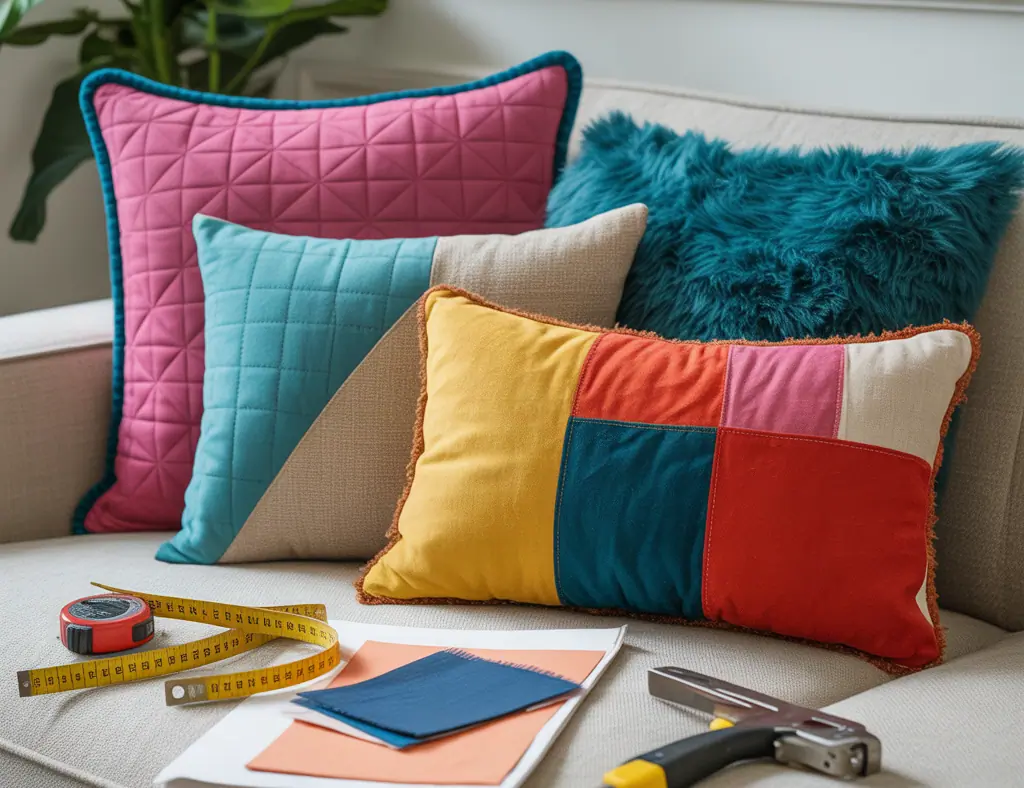
Picture this: you invite friends over and your living room looks polished—except the sofa. The pillows are faded, mismatched, or just plain boring. What if a handful of well-chosen, handmade throw pillows could transform the whole room overnight? Whether you’re tackling a weekend DIY or planning a full living room refresh, these ideas for couch pillows will help you add texture, color, and personality to your space without breaking the bank.
Why couch pillows matter (and how one change can refresh your room)
Couch pillows, sofa cushions, or decorative throws are the easiest home design tool to update mood, tone, and comfort. They anchor color palettes, soften hard edges, and can make an old sofa feel new. Use them to introduce trends—like boho, farmhouse, or modern minimalism—or to create practical upgrades like washable covers and supportive lumbar cushions.
Quick-start checklist: What you need before you begin
- Measurements: measure your sofa width and seat depth; common pillow sizes: 18″x18″, 20″x20″, 22″x22″, and lumbar 12″x20″.
- Fills: down/feather for luxe plumpness; polyester for budget; foam inserts for firm support.
- Fabrics: cotton, linen, velvet, faux leather, upholstery-grade fabric for durability.
- Tools: sewing machine (optional), scissors, measuring tape, pins, zippers or envelope closure supplies, fabric glue for no-sew.
Core design principles for throw pillow arrangements
Mix sizes and shapes
Combine 20″ squares with smaller 16″ or a 12″x20″ lumbar pillow for variety. Odd numbers (3 or 5) feel more natural and layered.
Balance patterns and textures
Pair one bold pattern with two solids or subtle textures. Use scale: large-scale prints look great with small geometric repeats.
Choose a color strategy
Pick a neutral base, then introduce one or two accent colors from art or rugs. Try tonal variations for a calm look or contrasting accents for energy.
Practical DIY ideas for couch pillows (step-by-step)
1. No-sew envelope pillow cover (30 minutes)
- Cut fabric a few inches larger than your insert (add 1″ seam allowance if sewing later).
- Fold edges inward and use fabric glue or iron-on hem tape to create clean hems.
- Create overlapping panels on the back (envelope style) and glue or stitch the side seams.
- Insert pillow and press. Easy to remove for washing if you used velcro or a button closure.
2. Zippered, removable cover (45–60 minutes)
- Cut fabric to size: insert size + 1″ seam allowance all around.
- Sew three sides, insert zipper on one side, finish sewing and turn right-side out.
- Use a zipper foot on the machine for neat edges. This method gives a polished, washable result.
3. DIY lumbar pillow with piping (intermediate)
- Cut fabric for a 12″x20″ insert, add seam allowance and piping cord pattern piece.
- Sew piping into seams before sewing pieces together for a professional edge.
- Add zipper or hidden envelope back. Piping elevates simple fabrics into designer-level cushions.
Creative styling ideas for different decor styles
Modern minimalist
Stick to 2–3 neutral tones (beige, gray, black), mix matte and subtle textures, and choose square pillows in 18″ and 20″. Keep patterns small and geometric.
Boho and eclectic
Layer rugs-inspired prints, tassels, pom-poms, and macramé textures. Use a mix of colors and round or oblong shapes for a collected look.
Farmhouse and cozy
Choose washed linen, ticking stripes, gingham, and muted sage or navy accents. Add a knitted pillow for extra warmth.
Budget-friendly and upcycling ideas
- Repurpose old sweaters into plush pillow covers—great for texture and warmth.
- Use thrifted table linens or curtains for unique fabrics—look for sturdy weave and color you love.
- Paint or stencil plain covers to create custom patterns without sewing.
Care, maintenance, and longevity tips
- Choose removable covers when possible—machine wash on gentle cycle and air-dry to maintain shape.
- Fluff feather inserts daily; replace or restuff polyester fills as they compress.
- Rotate pillow positions to prevent uneven wear and fading from sunlight.
Ideas for couch pillows: seasonal swaps and quick updates
Keep a few inexpensive covers to swap with the seasons—lighter linens for summer, quilted and velvet covers for winter. Small changes like a festive print or a textured lumbar pillow can make your living room feel new in minutes.
Real-world advice from DIYers
Start with two statement pillows and three supporting cushions to test color and scale. When sewing, pre-wash fabric to avoid shrinkage. If you’re new to sewing, begin with envelope or no-sew covers and graduate to zippers and piping as confidence grows.
Frequently Asked Questions
1. What pillow sizes work best on a standard three-seat sofa?
Common arrangements are two 20″x20″ pillows on each end with a 12″x20″ lumbar pillow in the middle, or three 18″x18″ pillows. Use larger sizes (22″) for deep, oversized sofas.
2. How do I make a no-sew pillow cover that still looks polished?
Use high-quality fabric glue or iron-on hem tape for hems, add velcro or decorative buttons for closures, and consider using fusible interfacing on edges to keep them crisp. Finishing touches like piping glued on with fabric glue can mimic sewn details.
3. What fill is best for longevity and comfort?
Feather/down inserts offer a plush, luxurious feel but require frequent fluffing. High-density polyester fills are affordable and maintain loft longer. For firm lumbar support, choose foam or a combination of foam core with a fiber wrap.
Conclusion — Try one idea for couch pillows this weekend
Refreshing your sofa doesn’t need to be expensive or intimidating. Pick one of these ideas for couch pillows—try a no-sew cover, stitch up a zippered case, or repurpose a thrifted textile—and see how quickly your living room transforms. Ready to dive into hands-on projects? Browse our DIY projects for step-by-step tutorials or explore more home design ideas and seasonal inspiration. Want updates and new tutorials? Join our mailing list or start with a simple no-sew pillow today!