Have you ever stood on your deck with a cold drink, sensing the space could be more stylish — or safer — but unsure where to start? Whether you’re tackling a weekend DIY projects sprint or planning a full deck refresh, choosing the right metal railing theme can change the entire vibe of your outdoor living area. In this guide you’ll find practical metal deck railing themes, step-by-step DIY tips, and design inspiration to make your deck both beautiful and functional.
Metal Deck Railing Themes: How to Pick the Right Style
Choosing the best metal railing for a deck depends on architecture, budget, maintenance tolerance, and the mood you want to create. Below are 10 popular metal deck railing themes — from modern minimalism to classic wrought iron — with real-world advice and easy DIY improvement ideas you can apply immediately.
Top Metal Deck Railing Themes and Ideas
1. Modern Minimalist (Aluminum & Straight Lines)
Clean lines, narrow rails, and powder-coated aluminum characterize this contemporary look. It’s low-maintenance, corrosion-resistant, and perfect for decks overlooking cityscapes or modern homes.
- Materials: powder-coated aluminum, flat top rail.
- DIY tip: buy sectional panels that bolt together to simplify installation.
- Styling: pair with composite decking and monochrome furniture for a cohesive design.
2. Industrial (Steel & Matte Finishes)
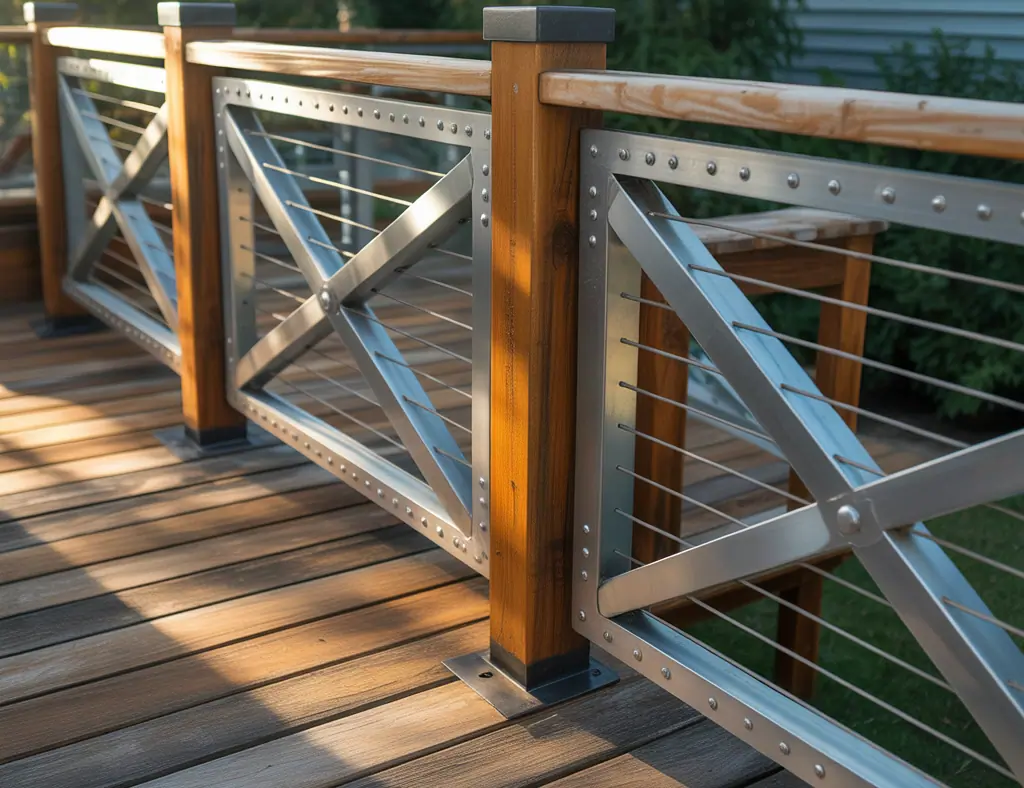
Exposed bolts, dark matte steel, and robust post designs give an industrial edge. Ideal for loft-style homes or to add contrast to natural wood elements.
3. Coastal & Nautical (Cable Railing)
Cable railing offers unobstructed sightlines — great for ocean- or lake-view decks. Use stainless steel cable and posts spaced per local code for safety.
- Maintenance: check cable tension annually and lubricate fittings.
- DIY caution: cable rail installation can be technical; consider a professional if you’re unsure about tensioning tools.
4. Classic Wrought Iron (Ornamental)
Wrought iron provides timeless elegance with scrollwork and decorative balusters. This theme suits period homes and formal outdoor rooms.
- Tip: choose galvanization or powder coating to prevent rust if you live in humid climates.
- Design idea: combine with stone pillars for a grand entrance effect.
5. Glass & Metal Combo (Modern Elegance)
Glass panels framed by metal posts create a sleek, upscale look while preserving views. This theme works well for patios that face scenic vistas.
6. Farmhouse Chic (Black Metal with Wood Top Rail)
Mix black metal balusters with a warm wood handrail for a cozy farmhouse aesthetic. The wood top softens the metal and adds a welcoming touch.
7. Industrial-Modern Mix (Steel and Cable)
Combine heavy steel posts with horizontal cable or bar infill for a bold, modern-industrial statement. This theme balances sturdiness with visual lightness.
8. Ornamental Patterns (Custom Laser-Cut Panels)
Laser-cut metal panels allow unique, custom patterns — florals, geometric motifs, or your house number. They’re perfect when you want a focal point.
9. Safety-First (Kid & Pet-Friendly Designs)
Choose vertical balusters spaced to meet code, or solid metal panels for families with small children and pets. Rounded top rails and no-stepping horizontal elements improve safety.
10. Mixed Materials (Metal, Wood, and Glass)
Mixing metal with wood and glass creates layered visual interest and allows you to tailor maintenance levels and costs. For example, metal posts with wood rails and glass inserts balance style and durability.
DIY Step-by-Step: Installing a Prefab Metal Railing
If you’re comfortable with tools, installing prefab metal rail panels is an achievable weekend project. Below is a condensed step-by-step process.
Materials & Tools
- Prefabricated metal railing panels, posts, and hardware
- Power drill, level, tape measure, wrench set
- Concrete anchors (for post bases) or lag bolts (for wood decks)
- Safety gear: gloves, safety glasses
Installation Steps
- Measure your deck perimeter and order panels to fit, allowing for any corner posts.
- Mark post locations and verify local building code height and baluster spacing requirements.
- Attach post anchors to deck surface or set them in concrete piers; make sure each post is plumb.
- Secure panels to posts per manufacturer instructions; use clamps to hold panels while fastening.
- Install top rail and end caps; double-check level and spacing throughout the run.
- Apply touch-up paint to any scratched powder-coating and inspect fasteners periodically.
Maintenance, Budgeting, and Real-World Advice
Plan for long-term upkeep when choosing a metal railing theme. Aluminum and stainless steel require minimal maintenance, while wrought iron needs rust prevention. Powder-coated finishes broaden color options but may need touch-ups over time. Budget for post anchors, hardware, and any finishing caps or trim — these small items add up.
Cost-saving tips:
- Buy modular panels to reduce custom fabrication fees.
- Refinish existing posts instead of replacing them when possible.
- Combine DIY labor (panel installation) with professional help for technical parts (glass insertion or cable tensioning).
Finishing Touches and Styling
Small details make a design sing: add integrated lighting to the top rail, planters that attach to balusters, or a matching gate. Choose post caps and hardware finishes that echo your home’s exterior fixtures for a cohesive look. For more comprehensive home styling ideas, check out our home design ideas page.
Frequently Asked Questions
Q: What is the best metal for outdoor deck railings?
A: Aluminum and stainless steel are top choices because of their corrosion resistance and low maintenance. Wrought iron offers a classic look but requires regular inspection and rust prevention. Choose based on climate, look, and upkeep tolerance.
Q: Do I need a professional to install metal railings?
A: Many homeowners can install prefab metal railing panels themselves if they’re comfortable with basic carpentry and tools. However, complex systems like glass insets or tensioned cable railings may require professional installation to meet safety standards and building codes.
Q: How do I ensure my metal deck railing meets code?
A: Check local building codes for railing height, baluster spacing, and load requirements before purchasing materials. Most codes require a minimum height (commonly 36″ or 42″) and maximum openings to prevent a 4″ sphere from passing through. When in doubt, consult a local inspector or contractor.
Conclusion — Ready to Pick Your Metal Deck Railing Theme?
Whether you want sleek modern metal deck railing themes, timeless wrought iron, or a kid-friendly safety solution, there’s a metal railing style that fits your home and DIY skill level. Start by measuring your deck, choosing materials that suit your climate, and ordering prefab panels if you want a weekend install. If you’re inspired to try a project now, head to our DIY projects hub for tool lists and printable checklists, or explore more home design ideas to match your new railing to the rest of your outdoor space.
Enjoy your deck upgrade — and if you try a metal railing theme, share a photo or leave a comment below to inspire other DIYers!