Ever tried working from a tiny corner of your living room and felt like your productivity was trapped in a shoebox? You’re not alone. Whether you’re converting a closet, claiming a hallway nook, or squeezing a desk into a studio apartment, creating a functional and stylish small office is a DIY challenge that pays off every day. In this post you’ll get practical, budget-friendly ideas for small office setups, step-by-step projects, and design inspiration to transform cramped spots into efficient workspaces.
Why smart small office design matters
Small office spaces demand clever planning—maximizing every inch, improving lighting, and reducing clutter will boost focus and comfort. These compact office design strategies are perfect for anyone wanting small workspace solutions, tiny home office setups, or compact nook home office ideas without a large renovation budget.
Ideas for small office: space-saving layout and design
Below are flexible ideas that work for apartments, spare rooms, and creative reuse of odd spaces.
- Convert a closet into a home office (closet office): Use a shallow desk, install shelves above, and add task lighting.
- Floating desk with vertical storage: Wall-mounted desktops free floor space and look clean. Pair with open shelving or cubbies above.
- Fold-down Murphy desk: A hinged desk that tucks away when not in use—perfect for multi-use rooms.
- Window nook workstation: Use the ledge as a desk or install a custom top to benefit from natural light.
- Corner L-shaped desk: Makes good use of corners in small rooms and gives extra surface area for dual monitors or paperwork.
- Mobile rolling work cart: A compact cart on wheels acts as a portable desk or printer station that can be hidden under a table.
- Under-stairs micro office: If you have unused space under stairs, add a desk and floating shelves for a cozy work den.
- Shared two-person compact office: Use slim desks back-to-back or a single long desk with divider panels to save room.
- Use multi-purpose furniture: Ottomans with storage, benches that double as filing cabinets, or side tables that convert to extra desk space.
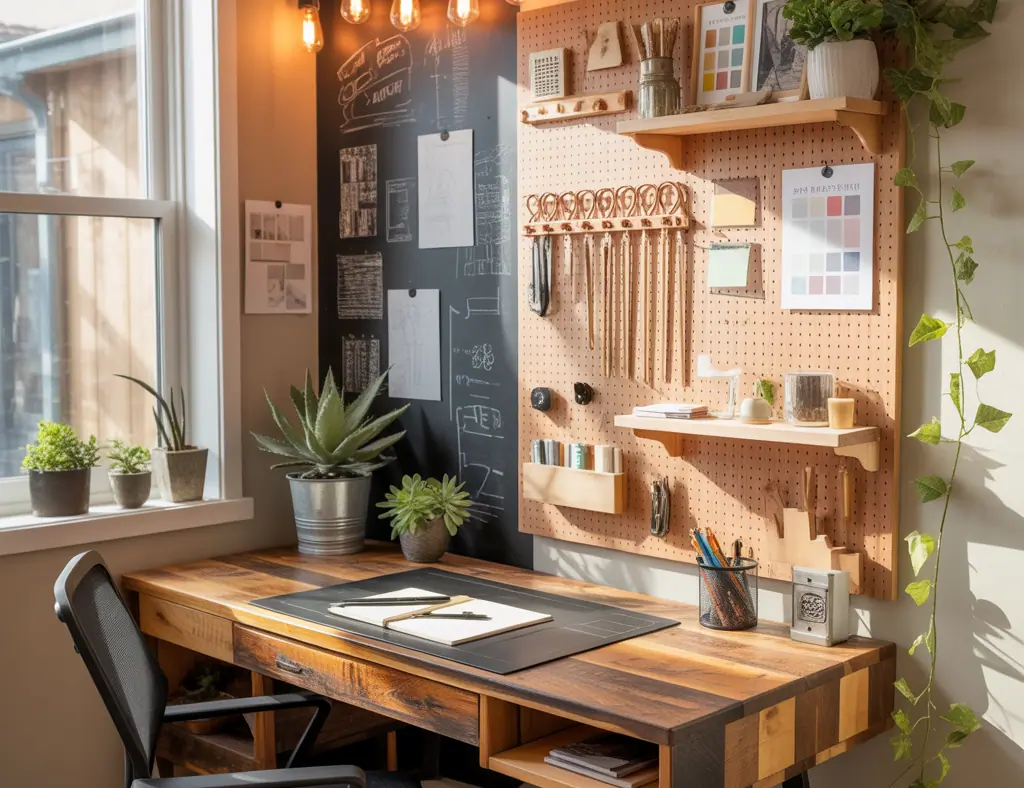
- Vertical pegboard or slatwall organization: Hang tools, supplies, and chargers to keep surfaces tidy.
Step-by-step: Transform a closet into a compact home office
- Measure the depth, width, and height of the closet. Standard convenient depth: 20–24 inches for a desk surface.
- Choose a desk surface: a pre-cut board, a narrow tabletop, or a floating shelf—cut to width.
- Install strong floating shelf brackets or a cleat system at a comfortable sitting height (28–30 inches from floor).
- Add overhead open shelves for storage—install 12–14 inches above the desk surface for reachable storage.
- Mount task lighting: a small LED strip or under-shelf puck lights keeps the work area bright without taking space.
- Finish with cable management: adhesive cable clips and a small power strip mounted under the desk prevent tangles.
- Personalize: a corkboard or pegboard on the back wall keeps notes off the desktop. Add a small plant for a fresh feel.
DIY floating desk and storage — quick build
Materials: solid wood board or plywood (1″ or 3/4″), heavy-duty floating shelf brackets, screws, paint/stain, adhesive cable clips.
- Cut the board to the desired width (20–30″ depth is ideal).
- Locate studs with a stud finder and mount brackets securely to studs.
- Place the desk top on brackets and secure from underneath.
- Install floating cube shelves or small wall cabinets above for storage.
Budget tip: Use salvaged wood for character and savings. Sand and seal for a professional finish.
Design inspiration and layout examples
Here are a few layout ideas to match your home’s style and workflow.
- Minimal modern: White floating desk, slim chair, single shelf, monochrome accessories—great for a clutter-free vibe.
- Rustic cottage: Reclaimed wood desk, woven baskets for storage, warm task lighting, potted herbs for natural texture.
- Industrial compact office: Metal hairpin legs, pegboard wall, open shelving and Edison-style bulbs for a workshop feel.
- Scandinavian bright: Light wood surfaces, pale walls, a mirror to open the space, and strategically placed greenery.
Practical DIY tips and tools you’ll need
Common tools and supplies to tackle small office DIY projects:
- Stud finder, level, drill, screwdriver, measuring tape, saw (circular or jigsaw), sandpaper.
- Materials: plywood or solid wood, brackets, screws, paint or stain, LED strip lights, power strip.
- Organizers: stackable trays, magazine files, under-desk drawers, cable clips.
Pro tip: Prioritize lighting and ergonomics. Even a small, well-lit desk with a comfortable chair and proper monitor height will feel bigger and more efficient.
Budget-friendly upgrades that make a big impact
- Paint the back wall a lighter color or add an accent to create depth.
- Install a small mirror to reflect light and give the illusion of space.
- Add a small task lamp with adjustable color temperature for eye comfort.
- Use adhesive hooks and pegboards to free up desktop area.
Frequently Asked Questions
How can I make a small office feel bigger?
Use light colors, maximize vertical storage, add mirrors to reflect light, choose furniture with legs (so you can see the floor), and keep surfaces clutter-free. Good lighting—both natural and layered artificial light—also opens up the space visually.
What is the best desk layout for a small office?
Corner desks and floating wall-mounted desks are top choices for small spaces. An L-shaped solution works when you need more surface area, while a fold-down desk works best for multi-use rooms to tuck away your workspace after hours.
How do I create an ergonomic setup in a compact area?
Keep your monitor at eye level (use risers if necessary), maintain a 90-degree angle at your elbows when typing, choose a supportive chair with adjustable height, and ensure your feet rest flat on the floor or a footrest. Even in small offices, posture matters—pick furniture that supports proper ergonomics.
Conclusion — Start your small office makeover today
Transforming tight quarters into a productive workspace is completely achievable with a few smart ideas for small office design and some hands-on DIY. Start by measuring your space, choosing a desk solution that fits, and adding vertical storage and good lighting. If you’re looking for project plans, check out our DIY projects page for step-by-step builds, or get broader inspiration from our home design ideas and kitchen upgrades sections—many storage and lighting tricks translate across rooms.
Ready to reclaim that corner and build a small office you love? Grab a tape measure and a notepad, pick one idea from this list, and make it yours. Share your progress or questions in the comments and let’s build better small spaces together.
For more tips on reducing moving expenses when setting up a home office, check out 6 Methods for Reducing Moving Expenses with Removalists.
For more desk decor ideas that can fit perfectly into your compact home office, check out Ideas for Desk Decor.