Have you ever squeezed past a swinging door in a crowded kitchen and thought, “That would look great in my house”? Whether you’re working around tight spaces, craving a touch of vintage charm, or searching for a playful room divider, saloon doors offer a fun, functional alternative to traditional doors. In this post I’ll walk you through practical, stylish, and budget-friendly ideas for saloon doors that you can try as DIY projects or adapt with the help of a pro.
Introduction: Why saloon doors are having a comeback
Saloon-style doors—often called swinging, cafe, or half doors—blend mid-century Western flair with modern utility. They’re ideal where airflow, quick access, or visual separation is more important than complete privacy. From rustic farmhouse pantries to sleek, minimalist laundry rooms, saloon doors make a statement while solving real layout problems. Below you’ll find inspiration, step-by-step installation guidance, and finishing tips to bring these ideas for saloon doors into your home.
Creative ideas for saloon doors: design inspiration and uses
Here are practical and stylish ways to use saloon doors throughout your house. Each idea includes variations for different aesthetics and budgets.
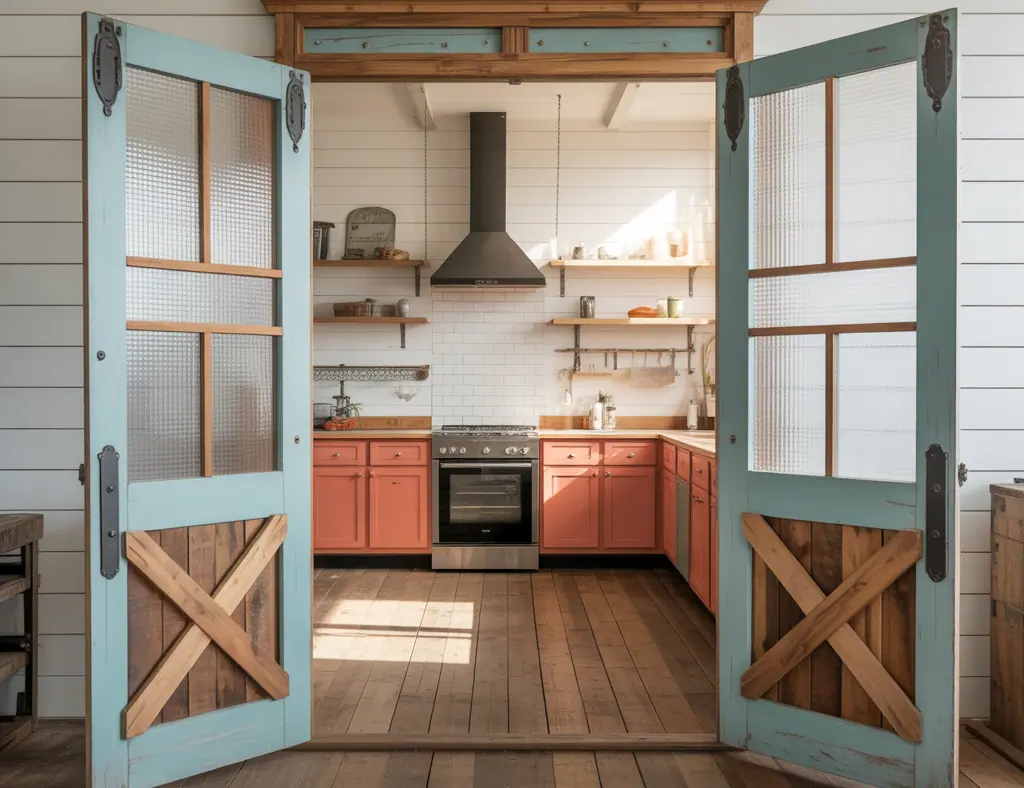
- Kitchen pantry swinging doors — Use slim, painted saloon doors to keep the pantry accessible. A half-height door keeps pets and kids out but maintains airflow.
- Cafe doors for a breakfast nook — Install glass-paneled saloon doors to let light into a cozy dining alcove while defining the space.
- Laundry room or mudroom entrance — Choose durable materials (plywood with water-resistant finish) for wet zones; add rubber bumpers for quiet operation.
- Kids’ playroom divider — Brightly paint the doors or stencil fun shapes. They’re great for supervision while keeping toys somewhat contained.
- Home bar or man cave access — Dark stained wood with antique hardware gives a classic saloon vibe for entertaining areas.
- Bathroom half-doors — Use for powder rooms where ventilation matters; add privacy film or frosted glass panels if needed.
- Closet or wardrobe faces — For walk-in closets with narrow entryways, swinging doors save space compared to full swinging doors.
- Barn door alternative — For homeowners who like the sliding look but prefer internal swing, oversized saloon doors create a statement without track systems.
- Modern minimalist version — Clean lines, simple hardware, and a natural wood or matte paint finish pair well with Scandinavian interiors.
- Repurposed antique slats — Salvage old fence boards or reclaimed wood for character-rich saloon doors that accentuate a rustic aesthetic.
DIY step-by-step: How to install saloon doors
Installing saloon doors is a manageable weekend project for most DIYers. Below is a clear step-by-step guide plus a material and tool checklist.
Tools and materials
- Prehung saloon doors or plywood/solid wood to build doors
- Crossbar or header mounting hardware (if top-mounted)
- Double-action spring hinges (adjustable swing)
- Drill, screwdriver, level, measuring tape, stud finder
- Screws, wood glue, sandpaper, paint or stain, polyurethane
- Rubber bumpers and optional soft-close adapters
Step-by-step installation
- Measure the doorway height and width. Standard saloon doors are typically 36–42 inches tall for half-doors; full-height swinging doors use the same opening height but shorter than a full door if you want a half look.
- If building, cut your boards or plywood to size, leaving 1/8–1/4″ clearance on sides and top to allow swing.
- Sand edges smooth and apply stain or paint. Finish with poly for durability—especially in high-moisture areas like the kitchen.
- Mark hinge locations on the door and door frame or mounting header. Pre-drill pilot holes.
- Attach the double-action spring hinges to the door first, then to the header or frame. Use a level to ensure doors hang straight.
- Adjust spring tension per hinge instructions to control how quickly and forcefully doors swing back to center. Install rubber bumpers to soften meets.
- Test for smooth operation; tweak hinge tension and alignment as necessary.
Finishing touches: hardware, paint, and maintenance
Small details make a big difference. Here are finishing tips to give your saloon doors lasting style and function.
- Hardware choices: Antique brass or matte black hinges and accent bolts suit vintage or industrial looks. For modern aesthetics, choose concealed hinges with minimalist pulls.
- Paint vs. stain: Paint offers bold color choices and easy matching to trim. Stain highlights wood grain for a warm, classic feel. Use exterior-grade finishes if doors are near moisture sources.
- Soft-close options: Add inexpensive dampers or soft-close adapters to reduce slamming—great for homes with kids or close quarters.
- Cleaning and upkeep: Wipe painted doors with mild soap and water; reapply a clear coat every few years on stained doors to preserve the finish.
Where to use saloon-style doors around your home
Saloon doors work well in many spaces—consider these high-impact placements:
- Kitchen pantries and butler’s pantries (pair with open shelving for a modern farmhouse look).
- Between the kitchen and dining room for a casual divide that keeps traffic flowing.
- Laundry rooms and mudrooms to hide clutter while allowing air circulation.
- Home offices or craft rooms where quick in-and-out access is helpful.
- Children’s play areas where supervision is important but you want to delineate space.
If you’re focusing on kitchen transformations, check out our internal page on kitchen upgrades for more small-space solutions that pair well with saloon doors. For more weekend builds, see our collection of DIY projects. You can also browse broader home design ideas for styling tips.
Real-world tips from the pros
- Match the door height to neighboring doors or trim lines for cohesion.
- Use adjustable spring hinges to compensate for seasonal movement in wood.
- If installing in an entryway with pets, add a small lower latch to keep pets contained when needed.
- Measure twice: small misalignments become obvious quickly with swinging doors.
- Consider acoustic needs — saloon doors won’t block much sound; use them where privacy isn’t critical.
Frequently Asked Questions
1. Are saloon doors easy to install?
Yes—many homeowners can install prebuilt saloon doors in a weekend. Basic carpentry skills and a few tools are required. Building custom doors adds time but remains a beginner-to-intermediate DIY task.
2. Do saloon doors provide privacy?
Not fully. Saloon doors are designed for airflow and visibility, so they offer partial visual separation and very limited sound insulation. For full privacy, consider pairing them with curtains, frosted panels, or using them in non-private rooms.
3. What materials are best for saloon doors?
Common choices include solid wood for durability and character, plywood for budget builds, and MDF for smooth painted surfaces. Use moisture-resistant materials near kitchens and bathrooms and protect finishes with polyurethane.
Conclusion: Try these ideas for saloon doors and give your home personality
Saloon doors are a creative, space-smart way to add character and function to your home. Whether you choose vintage-styled swinging doors for a home bar, a painted cafe door for your pantry, or a modern half-door for a laundry room, there are plenty of ideas for saloon doors to match your style and skill level. Ready to start? Pick a location, choose materials, and try a weekend DIY project—or get help from a local carpenter for a custom installation. Share your finished project photos or questions in the comments below and explore more inspiration on our home design ideas page.