Ever stood on your patio wishing the boring concrete wall around your yard looked as inviting as the rest of your home? Maybe you want more privacy from neighbours, a safer play area for kids and pets, or a striking backdrop for your garden—but don’t know where to start. If that sounds familiar, these practical and stylish ideas for perimeter walls will give you the inspiration, DIY tips, and step‑by‑step directions to turn a blank boundary into a beautiful feature.
Why your perimeter wall matters
Perimeter walls are more than just boundaries. They set the tone for your outdoor space, provide security and privacy, and can even improve property value. Whether you prefer affordable DIY upgrades or professional finishes, choosing the right wall treatment can make a small yard feel private and spacious or create a dramatic focal point for entertaining.
Creative ideas for perimeter walls
Below are 10 design approaches—ranging from quick DIY projects to longer-term installs—that suit different budgets, materials, and styles.
1. Timber slat cladding for warmth and privacy
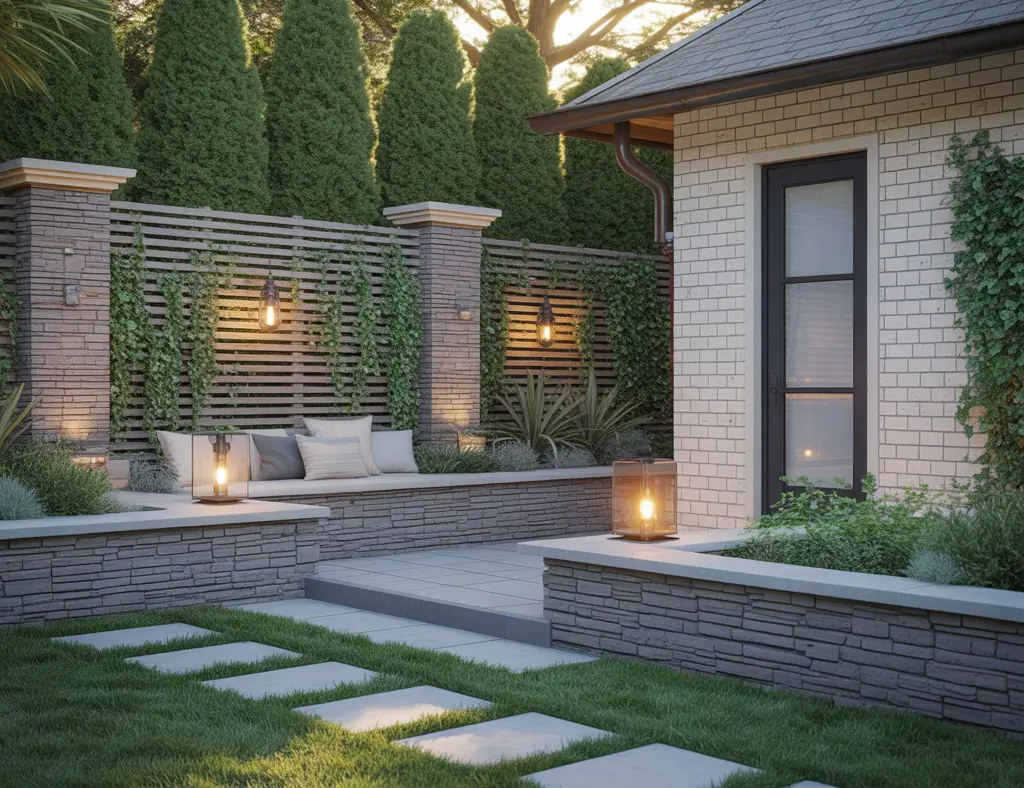
Modern and easy to install, timber slats soften a concrete or brick wall while adding contemporary texture.
- Materials: treated timber battens, screws, battens, stain or oil.
- DIY tip: Attach vertical battens to the existing wall or to timber rails fixed into masonry anchors. Leave a small gap between slats for breathability and drainage.
- Time & cost: 1–3 days for a typical yard; moderate cost depending on wood type.
2. Living green wall — vertical garden on a boundary
Perfect for small gardens, a living wall improves air quality and provides a lush backdrop.
- Options include modular planting panels, metal trellis with climbing plants, or pocketed felt systems.
- Tip: Choose drought‑tolerant plants like succulents, herbs, or native climbers and plan irrigation access.
3. Painted mural or decorative render
Paint transforms quickly. Use a mural, geometric pattern, or textured render to add personality. Weatherproof exterior paint and proper wall preparation are essential for longevity.
4. Gabion baskets and stone for rugged, modern texture
Gabion walls—cages filled with stone—create a sturdy, industrial look that doubles as a retaining wall in sloped gardens.
5. Brick or stone veneer for classic appeal
Thin‑veneer stone or brick slips applied to an existing wall can deliver high‑end results without rebuilding the structure.
6. Decorative concrete panels and rendered blocks
Fiber‑reinforced concrete panels or rendered blockwork offer durable surfaces that can be textured, painted, or combined with insets like timber or metal.
7. Metal screens and laser-cut panels
Corten steel or powder‑coated panels provide a striking, low‑maintenance option—great for adding cut‑out patterns that cast beautiful shadows.
8. Retaining wall solutions for sloped sites
When you need structural support, choose engineered retaining wall systems: sleepers, timber posts, modular concrete, or reinforced masonry. Always check local regulations and consider a structural engineer for taller walls.
9. Mixed-material designs
Combine masonry with timber caps, lighting, and planter boxes for a layered, custom look. Using multiple textures and heights creates visual interest and screens at the right levels.
10. Low-cost decorative toppers and capping
If you’re short on time or budget, add decorative capping, lattice, or potted plants on top of the existing wall to instantly elevate the look.
Step-by-step DIY: Installing timber slat cladding on an existing wall
This is a popular weekend project that modernizes a plain perimeter wall.
- Measure and plan: Measure the wall surface and calculate timber requirements (include waste).
- Prepare the wall: Clean, repair cracks, and apply a masonry primer if required.
- Fix horizontal battens: Use masonry anchors to secure timber battens horizontally at regular spacings (recommended 600 mm centers).
- Attach slats: Screw vertical slats into the battens, maintain a uniform gap (5–10 mm) using spacers.
- Finish: Sand, apply a preservative or stain, and add capping for top protection.
Pro tips: Pre‑finish the timber where possible for neat edges, and ensure bottom clearances for airflow and drainage to prevent rot.
Practical considerations and maintenance
Before starting any perimeter wall upgrade, consider:
- Local council rules and boundary easements—permits may be required for height changes.
- Drainage and waterproofing—especially for retaining walls and living walls.
- Material longevity—choose low‑maintenance finishes like powder coating, stainless fixings, or treated timber.
- Security and privacy needs—mix solid base walls with decorative upper elements for both safety and style.
Design inspiration and style pairings
Match the perimeter wall to your house architecture:
- Modern homes: horizontal timber slats, concrete panels, Corten steel.
- Traditional homes: brick veneer, stone cladding, painted render with classic caps.
- Coastal properties: white grout block, timber accents, salt‑tolerant plants.
For more project ideas and tutorials, explore our DIY projects and home design ideas pages.
Budgeting and timelines
Costs vary widely: simple paint or capping can be under a few hundred dollars, timber cladding mid‑range, and full stone or structural retaining walls costing several thousand. A small DIY timber cladding job can be completed over a weekend, while professional stonework or structural walls may take weeks.
Frequently Asked Questions
1. How high can a perimeter wall be without a permit?
Regulations vary by location. Generally, low fences under a certain height (often 1–1.8m) don’t need approval, but taller walls or retaining structures usually require permits. Check local rules before you begin.
2. What materials are best for low-maintenance perimeter walls?
Materials like powder‑coated metal, composite timber, sealed render, and stone veneer are low‑maintenance. Use stainless steel fixings and sealants to extend lifespan and reduce upkeep.
3. Can I add plants or planters to a perimeter wall?
Yes. Planters and vertical gardens are great for softening hard edges. Ensure planters have drainage, and for heavier soil loads use planters supported by brackets or integrated planter boxes with adequate structural support.
Conclusion — Start your perimeter wall makeover today
From quick surface updates to full rebuilds, the right ideas for perimeter walls can completely transform your outdoor space. Decide whether you want a DIY weekend refresh or a professional installation, plan for drainage and permits, and pick materials that match your style and maintenance needs. Ready to begin? Browse our kitchen upgrades and other renovation guides for more home improvement inspiration, and pick one perimeter wall idea to tackle this month—your yard will thank you.