Ever stood in your backyard staring at a lanky grapevine and thought, “I wish this looked intentional — like a cozy arbor or a vertical garden statement”? Whether you’re tackling a weekend DIY, prepping for your first vineyard-inspired planting, or simply wanting to turn a dull fence line into a productive green screen, these ideas for grape trellis will help you plan, build, and train vines that look great and produce fruit.
Why a Good Trellis Matters
A proper grape trellis supports healthy growth, increases sunlight exposure, improves air circulation (reducing disease), and makes harvesting easier. Plus, a well-designed trellis transforms vines into a decorative feature — think living walls, shaded patios, and charming garden entrances.
Quick Overview: Types of Grape Trellis Systems
- Single-wire fence trellis — simple and budget-friendly for small yards.
- Trellis with crossarms — more support and higher yields; common in home vineyards.
- Arbors and pergolas — perfect for patios, walkways, or as statement pieces.
- Vertical panels and lattice — ideal for privacy screens and small spaces.
- Fan or espalier trellis — decorative training for walls or tight areas.
10 Practical and Stylish Ideas for Grape Trellis
1. Simple Single-Wire Backyard Trellis
Perfect for beginners and narrow yards. Drive posts every 10–15 feet, run a galvanized wire at 5–6 feet high, and tie canes to the wire. This low-cost solution works well for training vines to run horizontally and keeps maintenance minimal.
2. Two-Wire Crossarm System (VSP – Vertical Shoot Positioning)
Use sturdy posts with a crossarm at the top and two to three wires. This style trains shoots vertically and is excellent for increasing sun exposure and fruit quality. Materials: pressure-treated posts, galvanized wire, spacers, and vine ties.
3. DIY Wood Arbor (Patio Shade + Fruit)
Build a 6’–8′ wide arbor using 4×4 posts and rafters. Train vines over the top to create a shaded walkway or seating area. Tip: add a reinforced beam to support mature vine weight and use rot-resistant wood or stain for longevity.
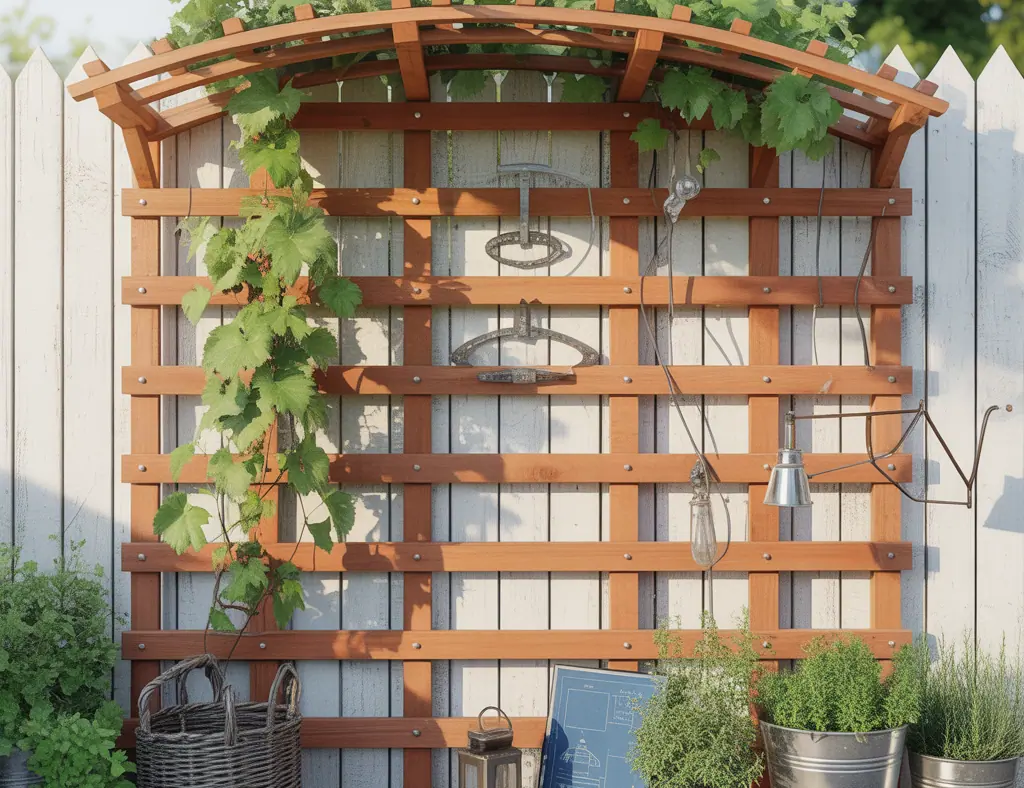
4. Lattice Panels for Privacy and Fruit
Attach lattice to an existing fence or sturdy posts to create a decorative privacy screen. This is ideal for small gardens where you want both aesthetics and utility. Plant vines at the base and weave shoots through the lattice as they grow.
5. Pergola with Grape Canopy
A pergola converts a patio into a cool, vine-covered retreat. Use spaced rafters to allow dappled light. For heavier grape varieties, reinforce with metal rods or additional cross beams and plan for regular pruning to manage weight and airflow.
6. Espaliered Vines Against a Wall
Espalier training flattens vines into two-dimensional shapes against walls or fences — ideal for maximizing space and creating architectural interest. Use horizontal wires spaced 12–18 inches apart and tie new shoots to create tiers.
7. Fan Trellis for Artistic Training
Fan trellises spread multiple arms from a central trunk, creating a fan-like pattern. This works well for young plants and produces a sculptural effect on terraces and cottage gardens.
8. Free-Standing Steel Frame Trellis
For a modern look, weld or buy steel frames that stand alone in beds or borders. They’re durable, thin visually, and can support heavy vines. Steel also gives a sleek contrast to lush greenery.
9. Reclaimed Materials Trellis (Budget-Friendly)
Upcycle old ladders, pallets, or fence slats into character-filled trellises. This approach adds rustic charm and keeps costs low. Ensure structural safety by reinforcing connections and anchoring to ground or posts.
10. Mixed-Use Trellis: Grapes + Pollinator Plants
Combine grapes with climbing pollinator plants like honeysuckle or native vines to boost biodiversity. Design with alternating planting pockets and provide separate supports for vigorous growers so they don’t smother the grapes.
Step-by-Step: Build a Simple Wooden Grape Trellis (DIY Guide)
- Plan: Measure the area and decide spacing (10–15 ft between posts for single-wire; 8–10 ft for heavier systems).
- Materials: pressure-treated posts, galvanized wire or metal rods, post hole mix, vine ties, wire tensioner (turnbuckle).
- Install posts: Dig 2–3 ft deep holes, set posts in concrete or compacted soil for stability.
- Attach wires: Run the wire horizontally at the desired heights and tension with turnbuckles.
- Plant vines: Place young grapevines at the base, mulch generously, and water deeply.
- Train and prune: In year one, focus on establishing a single trunk; in subsequent years, tie shoots to wires and prune annually to maintain structure.
Practical Tips & Real-World Advice
- Choose the right grape variety for your climate and desired use (table grapes vs. wine grapes).
- Use galvanized or stainless steel hardware to avoid rust and staining on fruit.
- Space vines properly — overcrowding increases disease risk.
- Regular pruning is critical: remove excess shoots to focus energy on fruiting canes.
- Consider a drip irrigation line along the trellis base for consistent moisture without wetting foliage.
- Label your trellis plans and take photos year-to-year to track training progress and adjustments.
Design Inspiration: Matching Trellis Style to Your Home
Match materials to your home’s style: painted lattice for cottage charm, raw steel for a contemporary look, or reclaimed wood for farmhouse appeal. Consider vertical grape support near outdoor kitchens or patios for fresh fruit within reach — a great pairing with kitchen upgrades like outdoor dining spaces.
Maintenance Checklist
- Annual pruning in late winter while vines are dormant.
- Inspect hardware and tighten wires each spring.
- Monitor for pests and fungal disease; improve airflow by thinning shoots.
- Replace warped or rotten wood components as needed.
Ideas for Grape Trellis: Frequently Asked Questions
1. How high should I build a grape trellis?
For home gardens, trellis height is typically 5–8 feet for ease of harvesting and pruning. Pergolas and arbors can be higher (8–12 feet) but must have reinforced support to carry mature vine weight.
2. Can I train grapes on an existing fence?
Yes. Attach wire or lattice to the fence with appropriate fasteners and ensure the fence is strong enough to bear the vine’s weight. Reinforce weak sections or add posts if necessary.
3. What are the easiest grape varieties for beginners?
Look for disease-resistant, cold-hardy varieties like Concord, Niagara, or certain seedless table grapes adapted to your region. Local nurseries often carry varieties suited to community conditions.
Final Thoughts & Call to Action
Transforming a scraggly vine into a beautiful, productive feature is one of the most satisfying DIY garden projects you can undertake. These ideas for grape trellis offer options for every skill level and budget — from simple single-wire systems to elegant arbors. Pick a design that fits your space, gather your materials, and start building this weekend.
Ready to get hands-on? Browse our DIY projects for step-by-step plans, and share your grape trellis photos to inspire others. If you want tailored advice, describe your space and goals and I’ll suggest the best trellis option for your yard.
If you’re planning a vineyard-inspired planting or simply want to enhance your backyard, don’t forget to check out our guide on 6 Methods for Reducing Moving Expenses with Removalists for some practical tips.
For more home improvement ideas, check out our collection of Attic Master Bedroom Ideas