Ever unpacked boxes of books after a move and realized your living room suddenly looks like a used bookstore? Whether you live in a tiny apartment, want a stylish reading nook, or need kid-proof storage that looks great, finding smart, attractive places for books is a classic home improvement challenge. In this post I’ll share tested ideas for creative book storage that blend DIY, design, and real-world practicality so you can display your library without surrendering your home to clutter.
Why creative book storage matters
Books are both functional items and decorative objects. Thoughtful book storage improves room flow, protects your collection, and can become a focal point of your home design. This guide mixes space-saving book storage solutions, shelving hacks, and built-in options that suit different budgets and skill levels with step-by-step tips you can try this weekend.
Quick planning tips before you start
- Take inventory: count tall vs. short books and special formats (magazines, art books).
- Measure available wall and floor space and note weight-bearing surfaces.
- Decide on style: modern minimal, rustic, colorful, or hidden storage.
- Set a budget—some ideas are under $50, others require carpentry or custom work.
10 practical ideas for creative book storage
1. Floating shelves for books (DIY step-by-step)
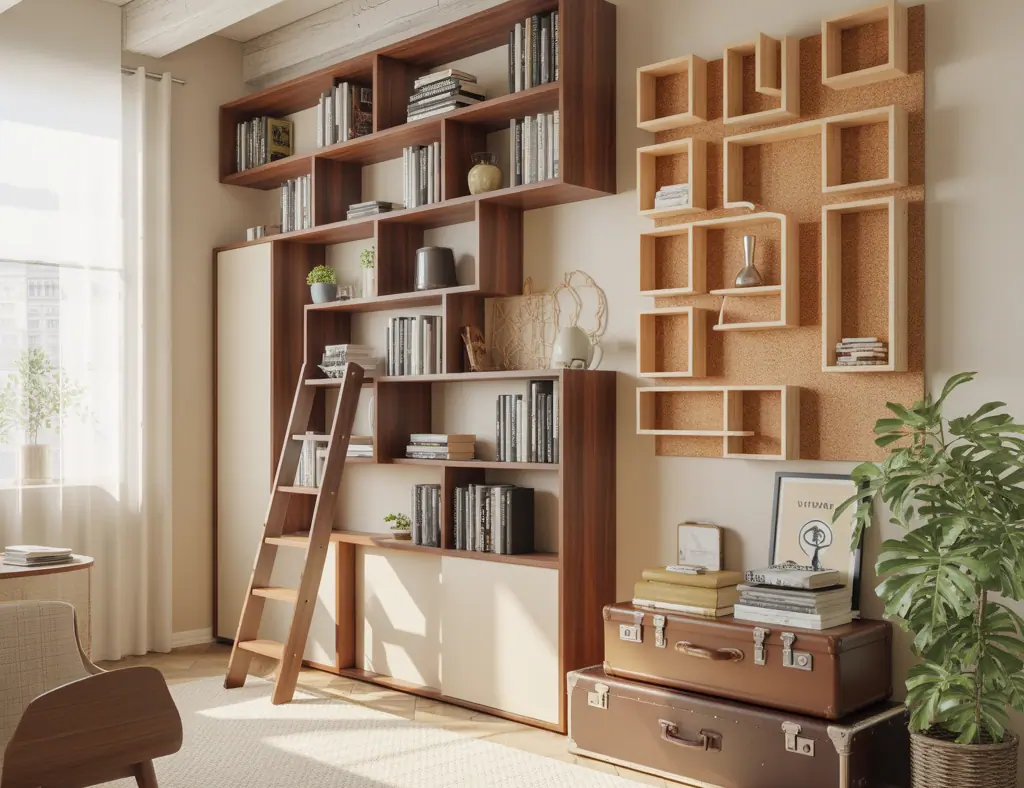
Floating shelves are a clean, modern way to store and display books. They’re ideal for tight spaces and can be staggered for visual interest.
- Materials: 1×8 boards, wall anchors, heavy-duty floating shelf brackets, paint or stain.
- Tools: drill, stud finder, level, tape measure, sander.
- Step 1: Plan shelf layout and mark studs.
- Step 2: Cut and sand boards, paint or stain.
- Step 3: Install brackets into studs and mount shelves, checking level each time.
- Tip: Use shelves no deeper than 10–12″ for novels; deeper shelves for oversized art books.
2. Built-in bench with book cubbies
Turn a window seat or entryway bench into storage by adding cubbies beneath the seat. This gives you a cozy reading nook and hidden book storage—perfect for living rooms and mudrooms.
3. Reclaimed crate shelving
Stack or wall-mount wooden crates for a rustic, modular bookshelf. Paint them in contrasting colors or leave natural for a farmhouse vibe. Crates are inexpensive and easy to rearrange as your collection grows.
4. Under-stairs book storage
Use the often-wasted space under stairs for slim pull-out drawers, angled cubbies, or a full built-in library. Under-stairs storage is a high-impact, high-value DIY that transforms awkward space into a statement feature.
5. Ladder bookshelf
A leaning ladder shelf is stylish and simple to build. It takes up little floor space while offering tiered display. Anchor to the wall for safety if you have kids or pets.
6. Door-mounted and behind-the-door organizers
Don’t forget doors—over-the-door shoe organizers or custom pockets can store paperbacks, magazines, and kids’ books without taking up visible space.
7. Floating book slings for kids
Fabric slings mounted to the wall keep picture books face-out and accessible for small hands. Use colorful cotton canvas and concealed screws for a low-cost, playful solution.
8. Repurposed furniture: trunks and dressers
Old dressers or vintage trunks can be given new life as book storage. Remove a few drawers for vertical book stacking or add shelves to the inside of a trunk for tidy, concealed storage.
9. Corner shelves and triangular nooks
Corners are often wasted. Floating triangular shelves or a custom corner cabinet make a cozy, compact mini-library.
10. Gallery-style book display
Mix framed art with books on wide picture rails. Display favorite books cover-out as art, alternating with small plants and sculpture for a curated look.
Design inspiration and styling tips
- Color code spines for a bold visual statement or group by genre for easy access.
- Mix storage types: closed cabinets for rare books, open shelves for everyday reads.
- Add LED strip lighting or picture lights to highlight shelves and protect against UV exposure.
- Use bookends, baskets, and stacked horizontal piles to vary rhythm and prevent monotony.
Real-world advice: durability, weight, and maintenance
Books are heavy—make sure shelving is rated for the weight. Use wall studs or heavy-duty anchors, and choose solid materials for long spans. For humidity control, keep books off damp basements and away from direct sunlight. Dust shelves regularly and rotate books occasionally to prevent spine deformation.
Space-saving strategies for specific rooms
Small apartments and studio living
Try narrow vertical shelving, under-bed rolling crates, or a simple ladder shelf. These are popular small apartment book storage ideas that maximize vertical space.
Kids’ rooms and play areas
Use low open shelves, faced-out displays, and washable fabric bins. Keep favorites within reach and rotate selections to maintain interest.
ideas for creative book storage — a final checklist
- Measure twice: plan around book sizes and available space.
- Prioritize safety: anchor tall units and avoid overloading shelves.
- Balance form and function: mix closed and open storage for protection and display.
- Personalize: paint, hardware, and styling make storage feel integrated with your home.
Frequently Asked Questions
1. What are the best book storage ideas for small apartments?
Use vertical storage like floating shelves, ladder bookshelves, under-bed containers, or wall-mounted pocket organizers. Choose slim, shallow shelves to keep walkways clear and use multi-purpose furniture (bench with cubbies) to save space.
2. How do I protect books from dust, sunlight, and humidity?
Place valuable books inside cabinets with doors, use UV-filtering window treatments, and avoid basements or attics with poor climate control. A dehumidifier or room humidifier can help maintain stable humidity (ideal 40–50%). Regular dusting and storing books vertically with even weight distribution prolongs lifespan.
3. Are floating shelves safe for heavy books?
Yes—if installed correctly. Use brackets designed for heavy loads and anchor them into studs or use heavy-duty wall anchors. Limit shelf span and consider thicker boards or built-in supports for long runs of heavy books.
Conclusion — Try these ideas for creative book storage today
Books don’t have to be a storage problem—they can be a design asset. These ideas for creative book storage range from easy weekend DIYs to high-impact built-ins that increase home value. Pick one small project (floating shelves or a crate wall) and give it a try this weekend. Want more project inspiration? Browse our DIY projects and home design ideas pages for step-by-step guides and material lists, or check out kitchen upgrades for multifunctional furniture tips that work across your home.
Ready to start? Share a photo of your space and the book storage idea you’re tempted to try — I’ll help you plan the next steps.