Ever stared at an empty corner of your property and imagined it transformed into a cozy, functional goat barn, only to be stopped by questions like “Where do I start?” or “Can I really build this myself?” You’re not alone. Whether you’re upgrading an old shed or starting a small homestead, these ideas for goat barn projects will help you design a safe, attractive, and practical space that suits both you and your animals. If you enjoy hands-on work, check out our DIY projects section for extra inspiration.
Why planning matters: Think comfort, safety, and workflow
Before swinging a hammer, take time to plan your goat barn around three priorities: animal comfort, biosecurity and cleaning ease, and workflow for feeding, milking, and storage. A well-designed goat barn saves time, reduces illness, and makes daily chores pleasant. Consider how many goats you’ll house, seasonal weather, and whether you need a milking area, quarantine pen, or storage for feed and bedding.
Top 10 ideas for goat barn: Practical DIY projects
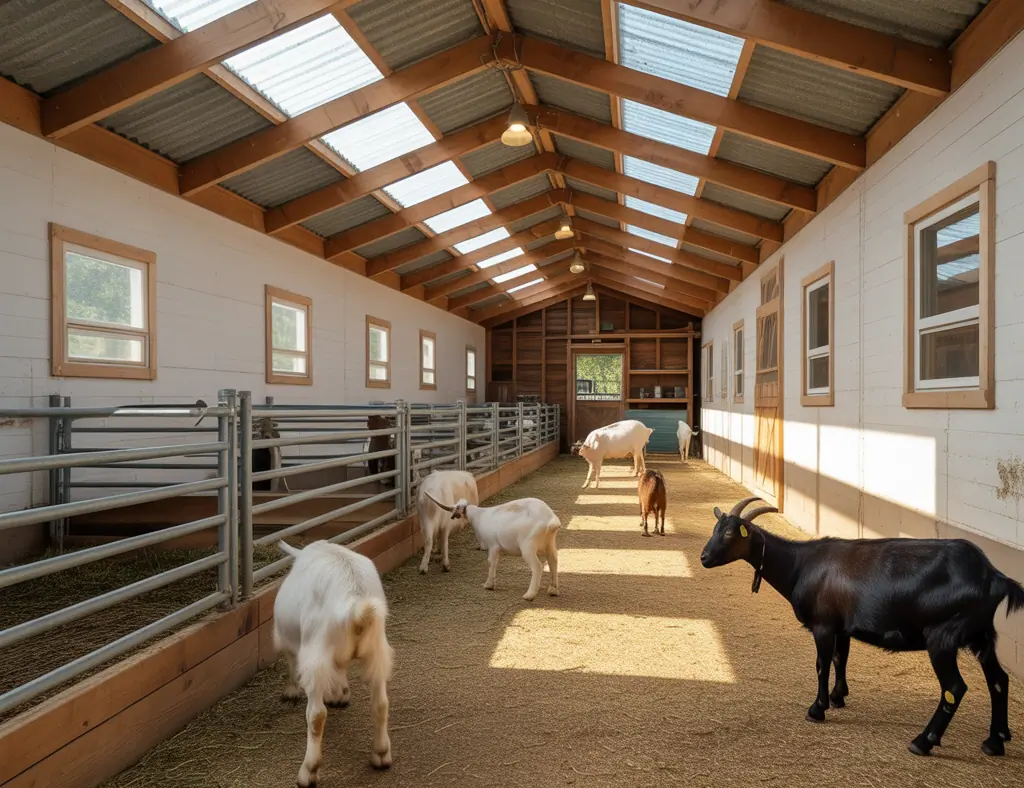
Here are ten high-impact, achievable ideas you can use alone or together to make your goat barn safer, more comfortable, and better-looking.
- Raised, slatted flooring — Install 2–4-inch gaps on pressure-treated joists to allow droppings to fall through for easier cleaning and drier bedding.
- Insulated, ventilated roof — Add reflective foil insulation and ridge vents to control temperature and moisture, especially in cold climates.
- Modular pen layout — Use removable panels to create flexible pens for kidding, medical isolation, or different age groups.
- Easy-access feeding station — Build a pass-through hay rack and grain shelf that keeps feed off the floor and reduces waste.
- Milking nook — Create a small, calming milking stall with non-slip flooring and hooks for cleaning supplies.
- Goat-proof fencing — Use welded wire or woven goat fencing with a top strand; secure posts in concrete for durability.
- Man-door plus wide barn door — A sturdy human door and a wide sliding or Dutch door for moving animals and equipment make chores easier.
- Stylish exterior finishes — Paint, board-and-batten siding, or reclaimed wood accents can turn your barn into a backyard focal point.
- Automatic waterers and heated buckets — Keep water available year-round with gravity-fed or frost-proof systems.
- Pasture access with porch — Add a small covered run or porch so goats can enjoy fresh air while staying sheltered from rain.
Materials, insulation, and flooring: What works best
Choosing the right materials improves longevity and animal health. For walls and structure, pressure-treated lumber and galvanized fasteners resist rot. Corrugated metal or shiplap siding are popular choices. For insulation, closed-cell spray foam or rigid foam board helps maintain temperature without trapping humidity; always provide adequate ventilation. For flooring, consider rubber mats over concrete in frequently occupied areas and compacted gravel with deep bedding where appropriate.
DIY tip: Budget-friendly insulation
- Use rigid foam board on the inside walls, taped and covered with plywood to protect from goats who chew.
- Install a continuous ridge vent and soffit vents for passive airflow to prevent condensation.
Step-by-step improvement: Build a simple 12×12 goat shed
This quick project gives you a functional, weatherproof shelter in a weekend with basic tools.
- Lay out a level gravel pad, 12×12 ft, compacted to form a stable base.
- Build a pressure-treated timber frame (skids or a perimeter beam) to elevate the shed and resist ground moisture.
- Construct wall frames with 2x4s, leave space for a human door and a wide goat door.
- Sheath with exterior-grade plywood, add roofing trusses, and cover with metal or asphalt shingles.
- Install a ridge vent and soffit vents, then insulate the walls with rigid foam and cover inside with plywood.
- Add a hay rack, feed shelf, rubber mats in resting areas, and a small storage shelf for supplies.
Finish with a coat of exterior paint to match your property and seal edges to keep drafts out.
Design inspiration: stylish goat barns and multi-use spaces
Goat barns don’t have to be purely utilitarian. Combine form and function with these design ideas:
- Use a gambrel or barn-style roof to maximize loft space for storing hay or bedding.
- Create a blended barn-studio where the front portion is a small workshop or garden tool room, separated from the animals by a sturdy partition.
- Incorporate reclaimed barn wood and industrial metal accents for a rustic-modern look.
- Landscape around the barn with gravel pathways, raised beds, and a small fenced grazing paddock to reduce mud and improve aesthetics.
If you’re tackling other projects around the house, these design principles translate well to broader home design ideas and even barn-inspired accents for your kitchen—see our page on kitchen upgrades for ideas on using reclaimed wood and industrial hardware indoors.
Maintenance and goat comfort tips
After the build, keep your barn healthy with these routine practices:
- Clean droppings daily from high-traffic areas; deep-clean and replace bedding weekly to prevent parasites.
- Inspect fencing monthly for wear and push-outs; goats are escape artists and will test weak points.
- Rotate pastures and provide climbing structures—goats love height and it reduces boredom and destructive behavior.
- Monitor ventilation and watch for damp or musty smells; adjust vents and add a small fan if needed.
Frequently Asked Questions
How big should a goat barn be?
Plan for at least 15–20 square feet per adult goat inside a sheltered area, plus outdoor run space. If you milk goats or keep pregnant does, add separate stalls for kidding and milking to reduce stress and disease spread.
What flooring is best for a goat barn?
Non-slip rubber mats over concrete are excellent for high-traffic areas and milking stalls. For general bedding, compacted gravel with deep straw or shavings keeps goats comfortable and dry. Slatted floors can help with manure management but require careful design to prevent hoof injuries.
Do goats need insulation?
Insulation helps stabilize temperatures and prevents drafts in cold climates, but ventilation is equally important to prevent moisture buildup. In mild climates, simple shelter from wind and rain may be sufficient; in colder zones, insulate walls and add a heat source for newborn kids if necessary.
Conclusion: Start your goat barn project today
With a little planning and these practical ideas for goat barn projects, you can build a safe, attractive, and efficient space for your herd. Start small with a simple shed conversion or tackle a full DIY goat barn plan—the key is prioritizing ventilation, durable materials, and flexible layouts. Ready to begin? Visit our DIY projects page for more step-by-step plans, sketch out your goat barn layout, and share your progress with the community. Want help refining your design? Leave a comment or ask a question below—let’s build something great together.