There is a particular kind of satisfaction in eating a tomato you grew yourself, still warm from the sun, that no grocery store version can match. Starting a backyard vegetable garden is one of the most rewarding projects a household can take on, and it is far more approachable than most beginners assume.
You do not need acreage, expensive equipment, or years of experience to grow a meaningful amount of your own food. What you need is a decent spot, a simple plan, and the willingness to learn from your first few mistakes.
This guide walks through everything a first-time gardener needs to get a productive vegetable garden going this season, from choosing the right location to keeping it alive through its first summer.
Choosing the Right Spot
Sunlight is the single most important factor in where you put your garden. Most vegetables, especially tomatoes, peppers, squash, and beans, need at least six to eight hours of direct sun each day to produce well.
Watch your yard for a full day before committing to a location. A spot that looks sunny in the morning can be shaded by a tree or fence line by early afternoon, and that lost light adds up over a growing season.
Proximity to a water source matters almost as much as sunlight. A garden bed thirty feet from the nearest hose bib will get watered far less consistently than one within easy reach, simply because of how human habits work.
Drainage is the third piece of the puzzle. If water pools in a spot for more than a few hours after rain, plant roots will struggle there, so either choose a different location or plan to build raised beds.
Deciding Between In-Ground Beds, Raised Beds, and Containers
In-ground beds are the cheapest way to start, since they use the soil you already have and require no building materials. They work best if your existing soil is reasonably good and drains well.
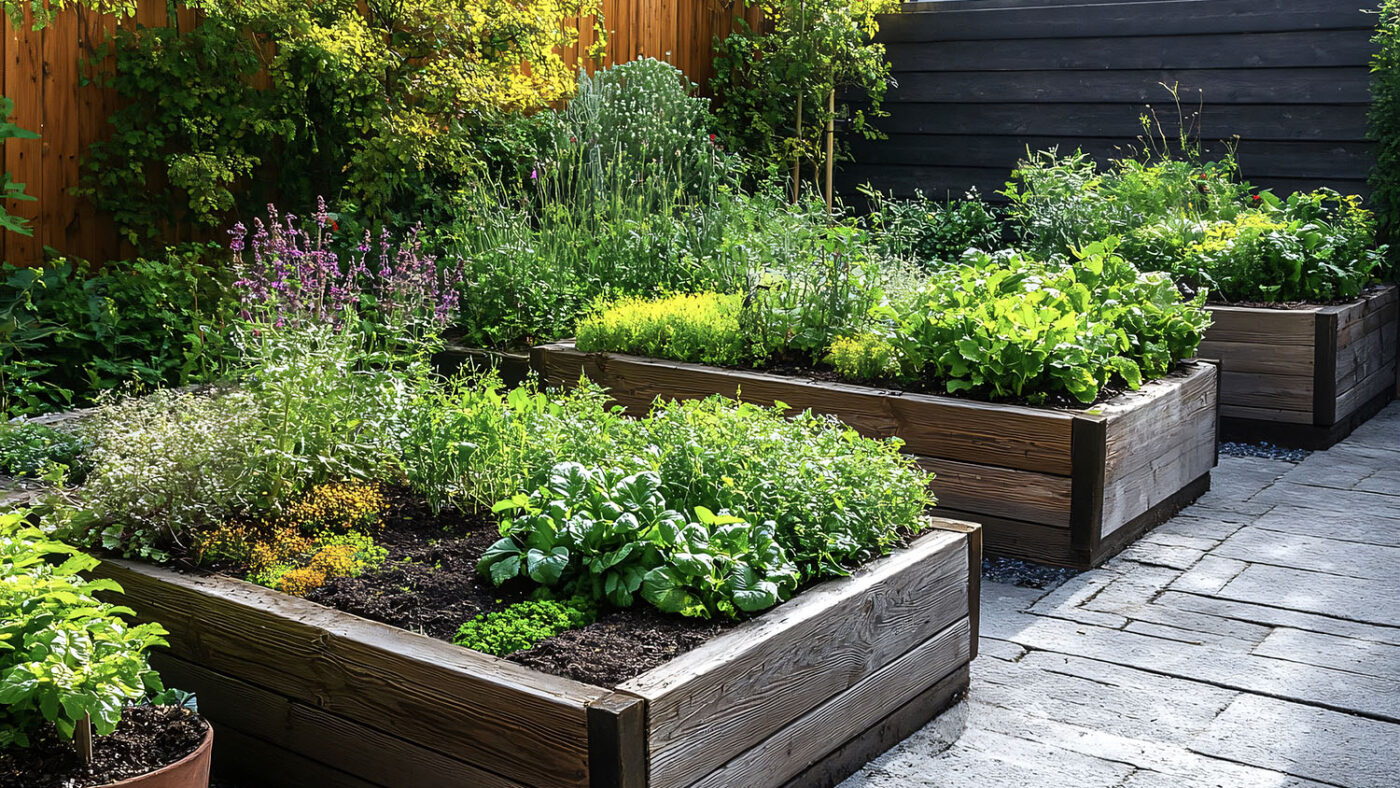
Raised beds solve a lot of problems at once. They give you control over soil quality from day one, warm up faster in spring, drain well, and are noticeably easier on the back and knees than bending over ground-level rows.
Containers are the right call for patios, balconies, or any yard with genuinely poor soil. Nearly every common vegetable, including tomatoes, peppers, lettuce, and even compact squash varieties, now has a container-friendly variety bred for exactly this purpose.
Many people who eventually move into full-scale homesteading start with exactly this kind of small container or raised bed garden, and it remains one of the best entry points into growing your own food regardless of how far you eventually take it.
Building Good Soil
Vegetables are only as good as the soil they grow in, and this is where most first gardens either succeed or quietly fail. A simple home soil test kit will tell you your pH and rough nutrient levels for under twenty dollars.
Most vegetables prefer a slightly acidic to neutral pH, somewhere between 6.0 and 7.0. If your soil falls outside that range, garden lime raises pH and sulfur lowers it, both widely available at garden centers.
Compost is the single best thing you can add to any soil type. It improves drainage in heavy clay, improves water retention in sandy soil, and feeds the microbial life that makes nutrients available to plant roots.
Aim to work two to three inches of finished compost into the top six to eight inches of soil before your first planting. If you do nothing else to prepare your bed, this one step will make the biggest difference in your results.
Choosing What to Grow
New gardeners consistently do better starting with a shorter list of reliable, forgiving vegetables rather than trying to grow twenty different things in the first year.
Easy Vegetables for Beginners
● Zucchini and summer squash, which produce heavily with minimal fuss
● Bush beans, which need no staking or trellising and improve soil nitrogen as they grow
● Leaf lettuce and other salad greens, which mature quickly and can be cut repeatedly
● Radishes, ready to harvest in as little as three to four weeks
● Cherry tomatoes, more forgiving of inconsistent watering than large slicing varieties
Once you have a season or two under your belt, expand into crops that ask a bit more of you, such as full-size tomatoes, peppers, cucumbers, and anything that needs trellising or more careful pest management.
Planting: Seeds vs. Transplants
Fast-growing, direct-sown crops like beans, radishes, carrots, and lettuce do best planted straight into the garden from seed, since they resent having their roots disturbed by transplanting. Homeowners weighing this up often find 4×8 Raised Bed Outdoor Vegetable Garden Layout Ideas Companion Plants useful too.
Slower-growing, heat-loving crops like tomatoes and peppers are almost always grown from transplants, either started indoors six to eight weeks before your last frost date or bought as seedlings from a nursery.
Check your local average last frost date before planting anything outdoors. Planting warm-season crops too early is one of the most common mistakes new gardeners make, and a single cold night can wipe out weeks of indoor growing effort.
Watering, Weeding, and Basic Maintenance
Most vegetable gardens need about one inch of water per week, delivered in one or two deep waterings rather than frequent shallow sprinklings. Deep, infrequent watering encourages roots to grow downward, which makes plants more resilient during hot spells.
A two to three inch layer of mulch, whether straw, shredded leaves, or wood chips, suppresses weeds, holds moisture in the soil, and moderates soil temperature. It is one of the highest-value, lowest-effort things you can do in any garden bed.
Weed while weeds are small. A weed pulled at two inches tall takes seconds; the same weed left for a month develops a root system that can take real effort to remove and will have already stolen water and nutrients from your vegetables.
Companion Planting and Succession Planting
Companion planting pairs vegetables that benefit each other, whether through pest deterrence, shade sharing, or more efficient use of space. Classic pairings include tomatoes with basil, which is believed to help repel certain pests, and beans with corn, since beans fix nitrogen that corn uses heavily.
Marigolds are a popular border plant throughout vegetable beds, valued for deterring several common garden pests while also attracting pollinators that benefit the rest of the garden.
Succession planting means sowing a new round of a fast-maturing crop every couple of weeks rather than planting everything at once. A single sowing of lettuce or radishes gives you one harvest window, while staggered plantings every two to three weeks keep a steady supply coming through the season instead of a single overwhelming glut.
This approach also smooths out the workload. Instead of an enormous one-time harvest of a fast-growing crop, you get smaller, more manageable amounts spread across several weeks, which is far easier to actually eat, cook, or preserve.
Extending Your Growing Season
A simple floating row cover, a lightweight fabric draped directly over plants, can protect tender seedlings from a late spring frost or push your fall harvest a few extra weeks past the first cold nights.
Cold frames, essentially miniature unheated greenhouses built low to the ground, let you start seedlings earlier in spring and keep cold-hardy greens like spinach and kale producing well into early winter in many climates.
Even something as simple as choosing a warm, south-facing microclimate against a wall or fence for your earliest and latest plantings can add real weeks to both ends of your growing season without any special equipment at all.
● Planting too much too soon, which leads to an overwhelming garden by midsummer
● Spacing plants too closely, which crowds roots and encourages disease from poor airflow
● Watering on a fixed schedule instead of checking actual soil moisture
● Ignoring pests until an infestation is well established, rather than checking plants weekly
● Giving up after one difficult season instead of adjusting and trying again
Final Thoughts
A backyard vegetable garden rewards patience and consistency far more than it rewards expensive equipment or perfect conditions. Start small, get your soil right, choose forgiving crops for your first season, and build from there.
Every experienced gardener started with a small bed and a handful of mistakes, and most of what you need to know will come from simply doing it for a season and paying attention to what your particular yard and climate actually need.