In today’s competitive landscape, simply having a great product or service is not enough. For businesses to thrive in July 2026, they must command a strong presence in the minds of their target audience. This is where Branding and Visibility become critical. Our brands are our most valuable assets, and they require continuous care to ensure they are seen, understood, and trusted by consumers.
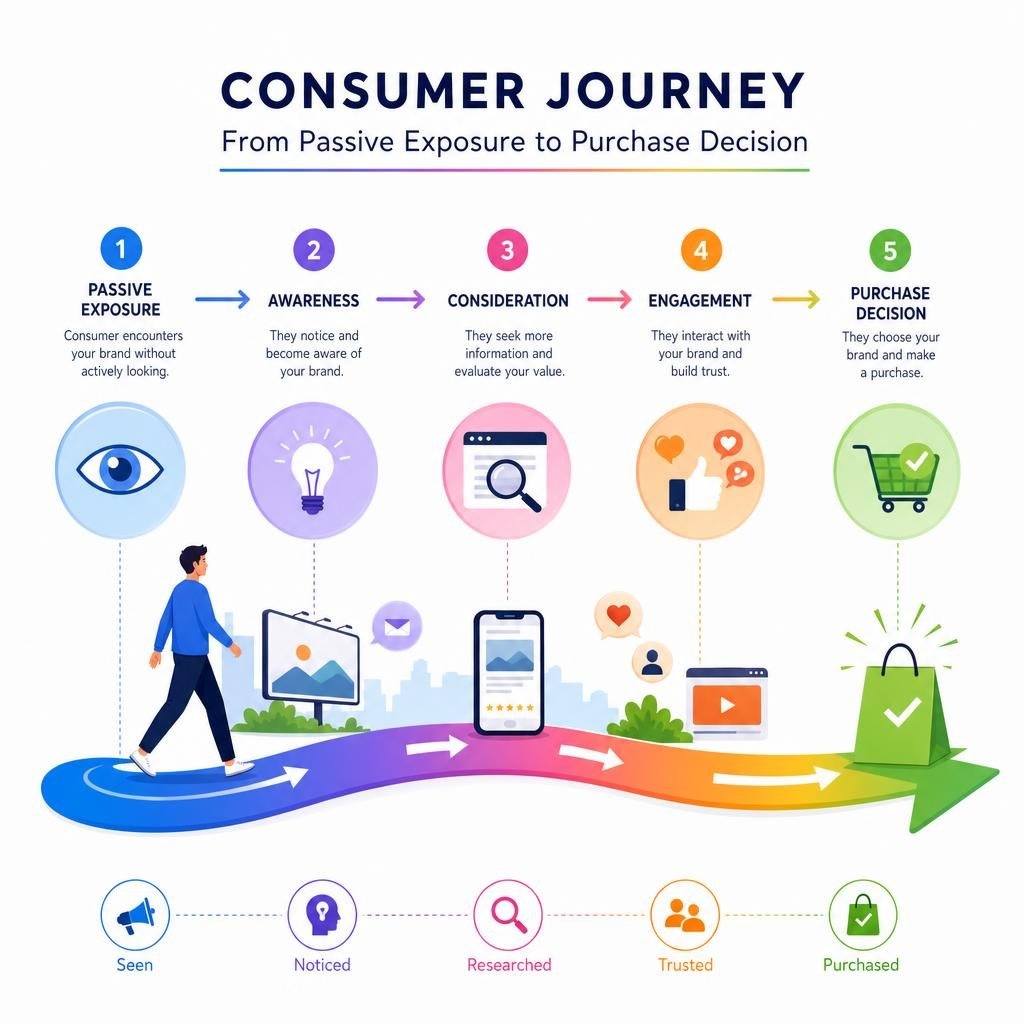
We know that brands with higher visibility are more likely to be considered by consumers when making purchasing decisions. This visibility builds credibility and trust, moving prospects from passive exposure to active engagement. The journey from first impression to final purchase is deeply influenced by how consistently and clearly a brand appears across various touchpoints.
This comprehensive guide will explain the essential differences between brand visibility and brand awareness. We will explore effective measurement techniques and outline the best strategies to boost your brand’s presence in the marketplace. From the impact on consumer decisions to the crucial role of digital advertising and AI, we cover it all. For businesses aiming to connect with their community, understanding the nuances of branding and local SEO can be a game-changer. We will also reveal key metrics to track and how social media, partnerships, and cutting-edge AI can enhance your efforts.
The Core Distinction: Brand Visibility vs. Brand Awareness
While often used interchangeably, brand visibility and brand awareness represent distinct yet interconnected concepts crucial for a brand’s success. Understanding this difference is fundamental to crafting effective marketing strategies. Brand visibility primarily concerns a brand’s presence and exposure across various marketing channels, while brand awareness delves into the audience’s recognition and recall of that brand.
Defining Brand Visibility in the Modern Market
Brand visibility is the frequency and prominence with which a target audience encounters a brand across all relevant marketing channels. It’s about ensuring your brand is “seen” – whether through digital ads, search results, social media feeds, or physical signage. It measures the external presence of your brand in the marketplace.
Measuring brand visibility goes beyond simple impressions. Key metrics include viewability, which assesses whether an ad or content was actually seen by a user, and in-view time, indicating how long the content remained visible. For video content, video completion rate is a vital indicator of engagement and visibility effectiveness. The goal is to maximize the number of meaningful touchpoints where your brand can be encountered, increasing its frequency of exposure. Eliminating fraudulent traffic is also a key component, ensuring that reported visibility metrics reflect genuine human interaction. Our focus here is on the technical aspects of ensuring your brand’s content is actually delivered and seen by real people, contributing to its overall market exposure and share of voice.
Understanding Brand Awareness and Recall
Brand awareness, on the other hand, measures the extent to which consumers recognize and recall a brand and associate it with its products or services. It lives in the consumer’s mind, reflecting their memory and familiarity. We distinguish between two primary forms of awareness:
- Unaided recall (top-of-mind awareness): This occurs when consumers can spontaneously name a brand without any prompts. For example, when asked to name a soft drink, “Coca-Cola” might be a top-of-mind response.
- Aided recall: This refers to consumers recognizing a brand when presented with a list of brands or a specific cue, such as a logo or slogan.
Measuring brand awareness typically involves consumer surveys that assess these levels of recall. It also encompasses brand perception, which explores the associations and feelings consumers have towards the brand. While visibility is the input – the effort to be seen – awareness is the output – the result of that visibility manifesting as recognition and memory within the target audience.
How Brand Visibility Shapes Consumer Decisions
The extent to which your brand is visible directly impacts consumer purchasing decisions. In a crowded marketplace, familiarity often translates to trust, significantly influencing what consumers choose to buy.
The Power of Familiarity in the Buyer Journey
Brands with higher visibility tend to have a higher likelihood of being considered by consumers when making purchasing decisions. This isn’t just anecdotal; it’s a fundamental aspect of consumer psychology. When faced with numerous options, consumers gravitate towards what is familiar, a phenomenon known as cognitive ease. This familiarity reduces perceived risk, making a known brand a default choice.
Consider the “95-5 rule” in B2B procurement: at any given moment, only about 5% of potential buyers are actively in-market. This means 95% are out of market and not actively looking for a solution. Consistent brand visibility ensures that when these out-of-market buyers eventually enter the purchasing process, your brand is already a recognized entity. This pre-existing familiarity builds trust, making your brand a preferred vendor and often the B2B front-runner. In fact, 68% of B2B buyers already have a favorite vendor in mind at the very start of their purchasing process, and will choose that front-runner 80% of the time. This highlights how crucial it is to establish a presence long before the active buying cycle begins, leveraging every opportunity for exposure, from digital campaigns to durable signs for branding that reinforce your physical presence.
The Compounding Value of Consistent Brand Presentation
Beyond simply being seen, how a brand presents itself across all touchpoints is equally vital. Omnichannel consistency in brand presentation is not merely a matter of aesthetics; it’s a strategic imperative. Consistent brand presentation across channels can increase revenue by up to 23%. This consistency reinforces visual identity, messaging, and core values, building a cohesive and trustworthy image in the consumer’s mind.
Developing clear brand guidelines ensures that every interaction, from a website visit to a social media post or customer service inquiry, reflects the brand’s true essence. This consistent experience fosters customer loyalty and contributes significantly to revenue growth. Brands that treat their brand infrastructure as foundational, rather than just a style preference, see these efforts compound over time, leading to stronger market positioning and greater customer trust.
Six Pillars of a Modern Branding and Visibility Strategy
In July 2026, a truly effective branding and visibility strategy is no longer a single-channel endeavor. It’s an integrated ecosystem that spans traditional search, AI-powered discovery, social platforms, and earned media. We advocate for a multi-faceted approach built on six key pillars.
Pillar 1: Building a Strong SEO Foundation
The foundation of any robust digital visibility strategy remains organic search. Over 90% of online experiences begin on search engines, making SEO indispensable. Our approach involves comprehensive keyword research to understand what target audiences are searching for. We then optimize content and technical aspects of websites to align with search intent, ensuring that when potential customers look for solutions, our brand appears prominently. This includes meticulous technical SEO to improve site speed, mobile-friendliness, and crawlability, alongside optimizing site structure for logical navigation and search engine indexing. The first organic result in Google Search garners an average click-through rate of 29%, underscoring the importance of strong rankings.
Pillar 2: Optimizing for AI Search and Answer Engines
The rise of generative AI has fundamentally reshaped how information is consumed. AI tools now synthesize answers from multiple sources, and 80% of consumers rely on AI-generated answers in a significant portion of their searches. This demands a new focus on answer engine optimization (AEO). Brands must ensure their content is structured explicitly with definitions, Q&A formats, and verifiable data, making it “legible to machines.” Entity recognition – ensuring AI systems accurately understand your brand, products, and services – becomes paramount. Implementing structured data and building citation authority across various platforms (Wikipedia, YouTube, Reddit, earned media) are crucial, as AI often cites third-party sources rather than brand homepages. AI search visitors convert at 4.4 times the rate of traditional organic visitors, making this a high-impact area.
Pillar 3: Leveraging Social Search and Community Presence
Social media platforms have evolved into powerful search engines. 65% of Gen Z have used TikTok as a search engine, and 80 million people search Reddit weekly. This necessitates a strategy for social search. Brands need to create engaging, platform-native content and foster user-generated content. Active participation in communities like Reddit and specialized forum marketing builds genuine trust and visibility. Algorithms on social platforms reward consistent posting and community interaction, making authentic engagement critical for expanding reach and building a loyal following.
Pillar 4: Thought Leadership and Employee Advocacy
Establishing thought leadership positions your brand as an authority in its industry. This involves publishing original, educational content and taking clear, defensible positions on industry topics. For professional service firms, building a team of visible experts or focusing on founder visibility and executive branding can be transformative. These individuals, through their professional social profiles and contributions, become powerful channels for the brand, attracting prospects and commanding higher fees. Employee advocacy programs, where team members share insights and content, amplify reach and build trust, as 70% of B2B buyers feel more connected when the CEO is active on social media.
Pillar 5: Digital PR and Earned Media Mentions
Digital PR focuses on securing mentions and coverage in authoritative publications and media outlets. This involves creating compelling stories, conducting original research, and engaging with journalists to generate positive media coverage. Earned media not only boosts credibility but also creates valuable backlinks, which are critical for SEO. As AI tools increasingly pull from authoritative third-party sources, building trust signals through earned media becomes even more important. Digital PR can produce AI citations within days, demonstrating its rapid impact on visibility.
Pillar 6: Strategic Paid Media and Sponsorships
While organic efforts build long-term equity, strategic paid media provides immediate visibility and targeted reach. Digital advertising platforms like Google Ads and social media ads allow for precise contextual targeting, ensuring messages reach the most relevant audiences. PPC (Pay-Per-Click) campaigns can drive immediate traffic and provide valuable data for optimizing other strategies. Furthermore, brand partnerships and event sponsorships can expose your brand to new audiences, leveraging the credibility of established entities. Paid media should amplify organic visibility, not replace it, acting as a powerful accelerator for brand recognition and lead generation.
Measuring the Success of Branding and Visibility Efforts
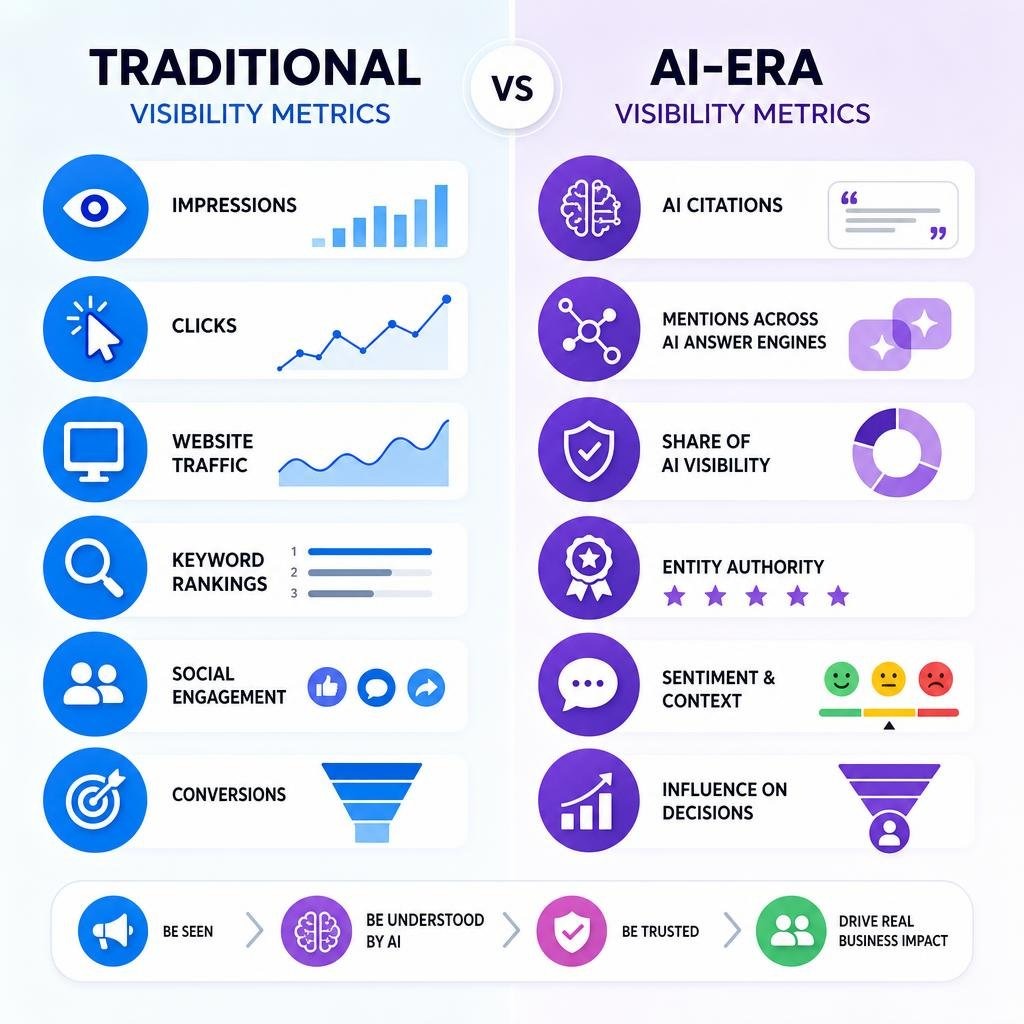
Effective measurement is crucial to understanding the impact of your branding and visibility initiatives and ensuring a positive return on investment. We track a blend of traditional and AI-era KPIs to gain a holistic view.
Technical Visibility and Fraud Prevention
Beyond basic impressions, we delve into metrics that confirm actual content consumption. Viewability metrics ensure that ads and content are genuinely seen by users, not just served. In-view time provides insights into engagement duration. Critically, combating ad fraud and identifying invalid traffic is essential to ensure budget efficiency and accurate reporting. Trust seals and certifications (like the Trustworthy Accountability Group’s Certified Against Fraud Seal) help validate the integrity of ad placements, ensuring that our visibility efforts reach real audiences.
Connecting Visibility Directly to Revenue Outcomes
The ultimate goal of visibility is to drive business growth. We connect visibility efforts directly to revenue through sophisticated attribution modeling, tracking the full prompt-to-conversion path. Key metrics include:
- Share of Search: This correlates strongly with revenue share, often with a 6-12 month lag, providing a predictive indicator of market share.
- Branded Search Volume: An increase here signifies growing brand recognition and direct consumer interest.
- Share of AI Visibility: Tracking how often your brand is cited by AI answer engines like ChatGPT, Claude, and Google AI Mode.
- Assisted Conversions: Measuring how visibility channels contribute to conversions even if they weren’t the last touchpoint.
- Pipeline Influenced by Visibility Channels: Directly linking brand exposure to sales pipeline generation, especially important for B2B.
These metrics allow us to optimize marketing budget allocation and demonstrate the tangible impact of brand visibility on the bottom line, moving beyond vanity metrics to show real business impact.
Frequently Asked Questions about Branding and Visibility
How does AI search change traditional branding and visibility strategies?
AI search fundamentally alters the landscape by prioritizing different signals. Unlike traditional search, which primarily ranks web pages, generative AI synthesizes answers from multiple sources. This means that direct website traffic is no longer the sole goal; instead, being a trusted citation source for AI becomes paramount. Brands must focus on making their content “machine-legible” through explicit definitions, Q&A formats, and structured data. Entity authority across diverse platforms (Wikipedia, social media, reputable industry sites) is crucial, as AI systems often pull from third-party validations rather than a brand’s own homepage. This shift means that brand visibility now requires a broader “Search Everywhere” strategy that encompasses not just SEO but also AEO, social search, and community engagement, adapting to changing search behavior.
What are the most effective metrics to track brand visibility?
To effectively measure brand visibility, we recommend a blend of established and emerging metrics:
- Share of Search: This is a powerful proxy for market share and future revenue, indicating your brand’s prominence in search queries related to your industry.
- Branded Search Volume: Tracks how many people are directly searching for your brand name, products, or services.
- Share of AI Visibility: Measures how frequently your brand is cited or recommended by AI answer engines. This is a critical metric in July 2026.
- Organic Impressions and Share of Voice: Reflects how often your content appears in organic search results and your brand’s overall presence in industry conversations.
- Unbranded Mentions: Monitors mentions of your brand across social media, forums, and news outlets that aren’t direct searches, indicating organic conversation and reach.
These metrics provide a comprehensive view of your brand’s external presence and its impact on audience engagement.
How long does it take to see measurable results from visibility investments?
The timeline for seeing measurable results from visibility investments varies significantly depending on the strategy and channel:
- Digital PR: Can produce AI citations and media mentions within days or weeks, offering relatively fast impact.
- Social Search: Building presence and engagement on social platforms typically shows initial traction within weeks to a few months.
- Organic SEO: Traditional SEO efforts, including content creation and technical optimizations, usually require 3-6 months to show significant ranking improvements and traffic growth.
- Long-term Compounding: True long-term brand awareness and authority, however, are built over years of consistent effort. While initial traction can be seen in 90 days, the full benefits of a compounding asset like brand visibility materialize over a longer period. Consistency across all channels is more important than speed, ensuring sustained growth and market leadership.
Conclusion
In the dynamic digital landscape of July 2026, Branding and Visibility are not merely marketing buzzwords; they are strategic imperatives for business longevity and growth. By understanding the distinction between visibility and awareness, and by meticulously implementing a multi-pillar strategy that spans traditional SEO, cutting-edge AI optimization, social engagement, and earned media, businesses can ensure they are not just seen, but remembered and chosen.
We believe that a well-executed visibility strategy transforms your brand into a compounding asset, where every effort builds upon the last, leading to sustained market presence and consumer trust. By consistently tracking the right metrics and adapting to the evolving digital environment, businesses can chart a clear path toward market leadership and sustainable growth. Embrace these comprehensive solutions, and watch your brand thrive.
Apart from that, if you want to know more about How to Choose the Right Moving Company for a Stress-Free Move then visit our Real Estate category.